
What Are the Key Dimensions of Soil Health?
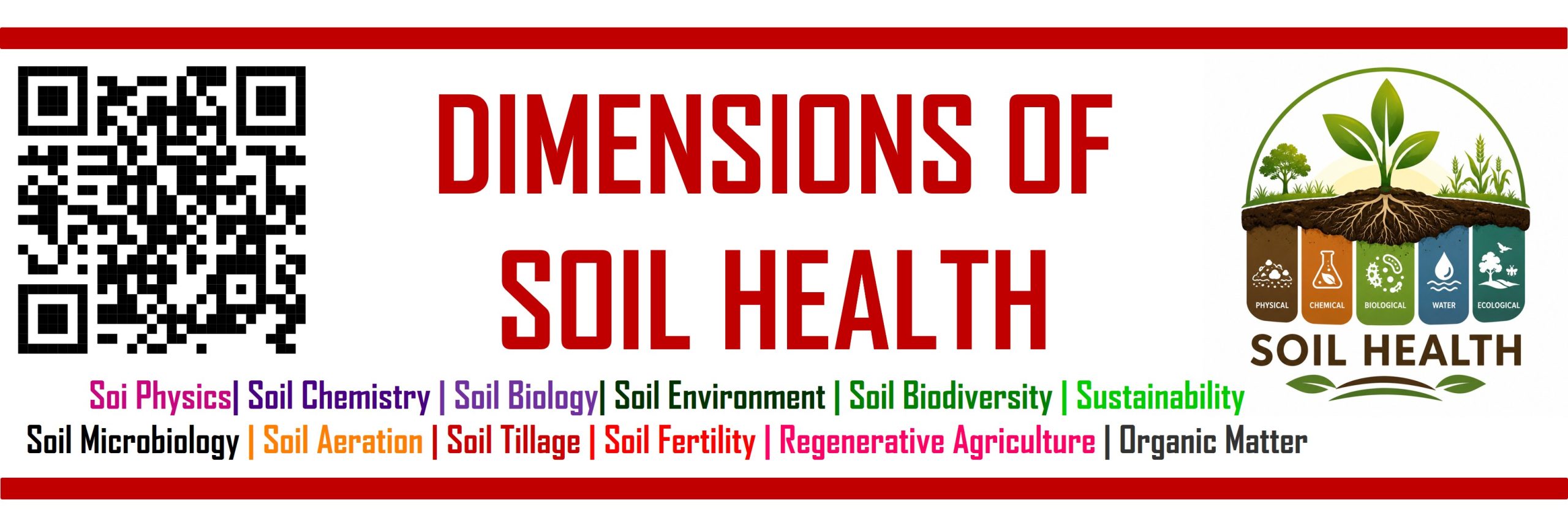
Soil health describes the continued capacity of a soil to function as a living ecosystem that supports plant growth, maintains water and air quality, and resists degradation over time. Usually, soil health is described in three main dimensions, each with numerous key components.
[Explore all MCQs] [Soil Health MCQs] [Soil Science MCQs] [Soil Physical Properties MCQs] [Soil Chemical Properties MCQs [Crop and Environment MCQs] [Botany MCQs ] [Plant Nutrition MCQs] [Plant Physiology MCQs][Environment Science MCQs]
What are the key components of Soil Health?
Why Soil Health Matters in Sustainable Food Production?
1. Physical Components
Physical components relate to soil physical properties, structure, pore space, and the movement of water and air in the soil.
Good soil structure or soil aggregation: Stable aggregates can resist slaking and allow easy movement of roots and water in the soil.
Soil porosity and aeration indicate adequate pore space in soil for air and water movement; well‑balanced soil moisture and oxygen for roots and microbial activities.
Bulk density: Low soil compaction allows deep root penetration and easy tillage.
Infiltration and drainage regulate water entry into the soil and good internal drainage reduces runoff and erosion.
What Are the Key Dimensions of Soil Health?
2. Chemical components
Chemical components of soil health are related to nutrient availability, pH, and contaminant levels.
Balanced pH and Cation Exchange Capacity (CEC): Suitable pH for crops and adequate cation‑exchange capacity to retain nutrients.
Nutrient availability: Adequate but non‑excessive levels of N, P, K, and micronutrients, with low leaching or fixation risk.
Organic matter and active carbon: Sufficient total organic matter and a measurable pool of active (labile) carbon that fuels biological activity.
Low toxins and salinity: Absence or low levels of harmful salts, heavy metals, pesticides, or other pollutants.
What Are the Key Dimensions of Soil Health?
3. Biological components
Biological components of soil health reflect the living community and its functional activity.
Soil biota diversity: Rich populations of bacteria, fungi, actinomycetes, protozoa, nematodes, mites, springtails, earthworms, etc.
High microbial activity: Active nutrient cycling, indicated by measures such as soil respiration, active carbon, or soil protein.
Strong soil food web: Interactions among predators, decomposers, and mutualists (e.g., mycorrhizal fungi) that support fertility and disease suppression.
Low pest/pathogen pressure: Naturally regulated populations of weeds, insect pests, and plant‑pathogenic organisms.
4. Functional outcomes (behavioral indicators)
Functional outcomes of soil health are resultant behaviors of a healthy soil rather than direct components, but they are often used to assess soil health.
High productivity and resilience: Sustained crop yields and quick recovery from drought, compaction, or flooding.
Good water regulation: Reduced runoff, erosion, and leaching, with improved water storage and groundwater recharge.
Low environmental impact: Minimum nutrient loss to water bodies and reduced greenhouse gas emissions from the soil.
Physical properties of soil, Biological soil health, Chemical soil properties, Soil organic matter, Soil microbial activity, Soil biodiversity, Soil structure, Soil porosity, Nutrient cycling, Soil resilience, Soil ecosystem, Soil degradation, Carbon sequestration, Water infiltration in soil, Soil productivity
What Are the Key Dimensions of Soil Health? Importance of soil health in agriculture: Physical, chemical and biological components of soil; Soil health indicators for sustainable farming; Role of soil organic matter in soil health; How soil health affects crop productivity; Climate-smart soil management practices; Soil health and environmental sustainability; Biological indicators of healthy soil; Soil health assessment methods
Soil health, Agronomy, Sustainable Agriculture, Climate Change, Agroecology, Precision Agriculture, Soil Science, Environmental Sustainability, Crop Production, Agroecosystems, Climate-Resilient Agriculture, Soil Fertility, Regenerative Agriculture, Digital Agriculture
#SoilHealth #SustainableAgriculture #SoilScience #ClimateSmartAgriculture #Agronomy #HealthySoil #Agroecology #PrecisionAgriculture #RegenerativeAgriculture #ClimateResilience #SmartFarming #SustainableFarming #NatureBasedSolutions #WaterManagement #SoilFertility #AgriculturalInnovation #GreenAgriculture #SustainableDevelopment #PlantScience #EnvironmentalEcology #EnvironmentalScience #Agroecosystems #FoodSecurity #SoilBiodiversity #CarbonSequestration #SoilManagement #CropProductivity #DigitalAgriculture #ClimateChange What Are the Key Dimensions of Soil Health?