
Food Science MCQs with Answer
Multiple Choice Questions for Professional Tests

Food Science MCQs with Answers
| [Test 1] | [Test 2] | [Test 3] | [Test 4] |
| [Test 5] | [Test 6] | [Test 7] | [Test 8] |
| [Test 9] | [Test 10] | [Test 11] | [Test 12] |
Note: These tests are for preparation purposes only. Choices may differ depending on the scientific material consulted. Return to [MCQ Homepage]
Other Multiple Choice Questions (MCQ) Tests for Professional Exam Preparation
Return to [MCQ Homepage]
Multiple Choice Questions (MCQs) for Professional Test Preparation
Use of Multiple-choice questions (MCQs) is among the proven strategies to test your knowledge and improve your skills for relevant exams. These Expert-Approved MCQs cover various aspects of the fundamentals of agriculture, crop plants, production technologies, dietary and nutritional importance and industrial processes. Moreover, key questions about soil, irrigation, pests, diseases and other aspects of crop management are also included.
Return to [MCQ Homepage] Food Science MCQs with Answers,
Food chemistry is the scientific study of chemical processes and interactions within foods, focusing on the composition, structure, properties, and changes of biological and non-biological components during handling, processing, and storage, to ensure quality, safety, nutrition, and develop new products.
Food microbiology is the study of microorganisms present in food, their beneficial roles in food production & processing, and their harmful effects on food quality and safety, focusing on control, preservation, and improving food quality and public health.
Food processing is the transformation of raw ingredients into refine food products through cleaning, washing, chopping, cooking, freezing, fermenting, or packaging to make them safe, edible, convenient, and with increased shelf life. These processes extend from simple home cooking to complex industrial techniques.
Food processing processes include basic preparation, preservation, and advanced methods.
Food processing primarily aims to extend the shelf life of food products, ensure safety, improve taste/texture, increase convenience to use, add nutritional value, and extend the availability of seasonal foods.
Food Preservation includes processes of treating and handling food to stop or slow spoilage, preventing microbial growth (bacteria, fungi) and oxidation, to extend shelf life, maintain nutritional value, taste, texture, and ensure food safety for future consumption.
The practice of handling, preparing, and storage of food to prevent contamination and foodborne illnesses is called Food Safety. Implements HACCP for the production line; sets quality standards.
Food engineering applies principles of engineering, science, and mathematics to design and improve food processing, production, preservation, packaging, and distribution systems. It ensures the supply of safe, nutritious, quality, and efficient food for consumers, from farm to table. It involves all steps from plant design and machinery to quality control and sustainability.
Food Biotechnology uses living organisms or their components to develop, modify, or improve foods, processes, and ingredients, applying modern sciences to enhance nutrition, yield, taste, shelf-life, or resistance.
Food rheology is defined as the branch of physics that deals with the mechanical properties of complex food systems, focusing on how individual components and phases influence the final texture and structure of food products.
Food security describes that everyone has reliable access to enough safe, nutritious food for an active, healthy life, meeting dietary needs and preferences, with availability, access, utilization, and stability as key pillars, ensuring no one lives in hunger or fears starvation.
Multiple Choice Questions (MCQs) for Multiple Competitive Testing Services
Use of Multiple-choice questions (MCQs) is among the proven strategies to test your knowledge and improve your skills for relevant exams. These Expert-Approved MCQs cover various aspects of Agriculture, Agronomy, Soil Science, Horticulture, Entomology, Environmental Science, Plant Breeding and Genetics, Forestry, General Biology, Botany, Zoology, General Knowledge, Food Science.
These MCQs are designed to assist candidates preparing for various competitive examinations, including: National Testing Service (NTS); Open Testing Service (OTS); Educational Testing and Evaluation Agency (ETEA); Federal Public Service Commission (FPSC); Seed Biology
Provincial Public Service Commissions (PPSC, SPSC, BPSC, KPPSC), Punjab Public Service Commission (PPSC); Balochistan Public Service Commission (BPSC); Khyber Pakhtunkhwa Public Service Commission (KPPSC); Sindh Public Service Commission (SPSC); Parks and Horticulture Authority (PHA); Zarai Taraqiati Bank Limited (ZTBL);
Food Science MCQs with Answers, Online Quiz Sustainable Food System, Food Science and Technology Online Quiz, Food Science entrance exam preparation, Food inspector preparation
Union Public Service Commission (UPSC); Indian Administrative Service (IAS); Indian Council of Agricultural Research (ICAR), Agricultural Scientists Recruitment Board (ASRB), Civil Services Examination, State Public Service Commissions, e.g., TNPSC, UPPSC) Uttar Pradesh Public Service Commission (UPPSC), Seed Science MCQs, Public Service Commission, Seed Development, Agriculture Office, Seed Scientists, Dormancy, seed physiology, seed testing,
Food Science MCQs, Nutraceuticals and health, Food quality assurance systems, Food Science MCQs with Answers, Online Quiz Sustainable Food System, Food Science and Technology Online Quiz, Food Science entrance exam preparation, Food inspector preparation
Public Service Commission (PSC); Public Service Recruitment Management System (PSRMS); Bangladesh Public Service Commission (BPSC), Civil Services Examination, PhD Entrance examination, Agriculture officer, Agricultural Universities, Agriculture Research Institutes, scientific officer, Departmental Test, PhD Admission Test, GAT Subject Test, GRE Subject, Agriculture Officer Tests, Seed Scientists, Food Science MCQs, Food Safety, Food Quality, Shelf life, Nutraceuticals, Food Chemistry, Food Microbiology, Food preservation, Food processing,
In case of any suggestion or correction feel free to contact us at editor.jeas@outlook.com or Whatsapp: +92-333-6304269 wa.link/8lxt3f
Food Science MCQs, Nutraceuticals and health, Food quality assurance systems, Food Science entrance exam preparation, Sustainable food systems
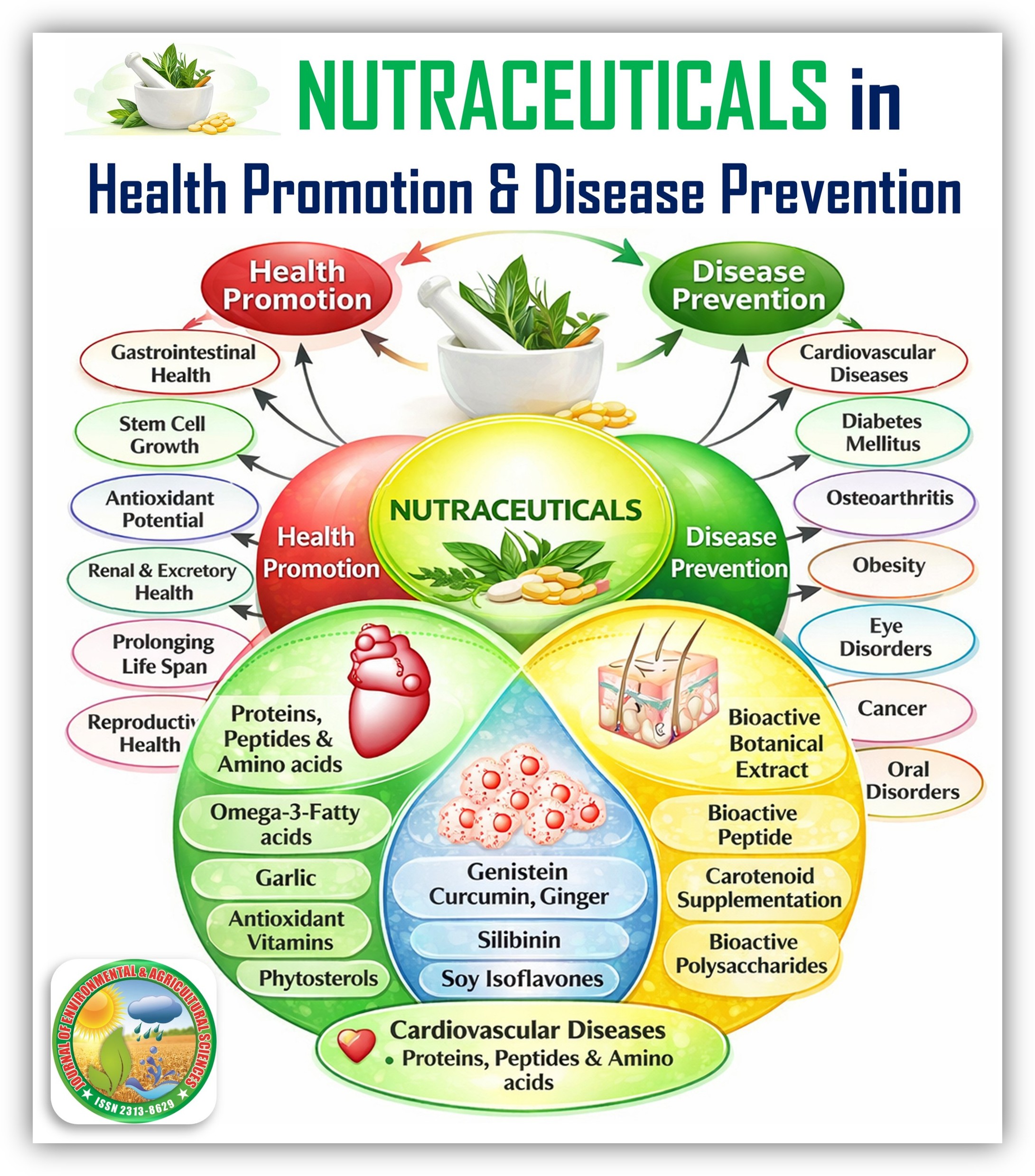
Nutraceuticals are bioactive compounds derived from foods that provide health benefits beyond basic nutrition, playing a preventive and supportive role in chronic disease management. These include functional foods, dietary supplements, probiotics, polyphenols, omega-3 fatty acids, and plant-derived phytochemicals, many of which have been associated with reduced risk of cardiovascular diseases, diabetes, cancer, and inflammatory disorders. Their health effects are primarily mediated through antioxidant activity, modulation of gut microbiota, anti-inflammatory pathways, and regulation of metabolic signaling. However, despite promising epidemiological and clinical evidence, challenges remain regarding standardization, bioavailability, regulatory oversight, and substantiation of health claims, underscoring the need for rigorous clinical validation and formulation innovation.
Food Science MCQs with Answers, Nutraceuticals and health, Food quality assurance systems, Food Science entrance exam preparation, Sustainable food systems