
Journal of Environmental and Agricultural Sciences (JEAS). Somroo et al., 2026. 28(1&2): 11-21
Open Access – Research Article
Impact of Multi-Walled Carbon Nanotubes on Seed Germination Indices in Cotton (Gossypium hirsutum L.) under an Integrating Experiment Design
Salma Namitlullha Soomro 1,*, Sabeen Rehman Soomro 1, Muhammad Aasim 2,*
1 Department of Plant Production and Technologies, Faculty of Science and Technology, Sivas University of Science and Technology, 58000 Sivas, Türkiye
2 Department of Precision Agriculture and Agricultural Robots, Sivas University of Science and Technology, 58000 Sivas, Türkiye
Abstract: Cotton (Gossypium spp.), often called White Gold, is a major fiber and oilseed crop plant of Malvaceae family with its immense industrial and commercial value. Cotton growth and yield are significantly influenced by rapid and uniform germination. This study was designed to investigate the potential of multi-walled carbon nanotubes (MWCNTs) to enhance early establishment of cotton seedlings germinated under controlled conditions. Seeds of two commercially cultivated cotton cultivars in Türkiye (STN-468 and Esperia) were sterilized with 0.1% HgCl2 and cultured on Murashige and Skoog (MS) medium supplemented with nine MWCNT concentrations (0, 25, 50, 75, 100, 125, 150, 175, and 200 mg L⁻¹). The germination data was collected and analyzed using the GerminaR statistical package to compute nine germination indices, including germination percentage (GRP), mean germination time (MGT), germination speed coefficient (GSP), mean germination rate (MGR), uncertainty (UNC), synchronization (SYN), variance of germination time (VGT), standard deviation of the germination time (SDG), and coefficient of variation (CVG) of germination time. The collected data were analyzed using traditional ANOVA with the advanced experimental design approaches, including Taguchi Design and Response Surface Methodology (RSM). Low to moderate MWCNT concentrations resulted in significant enhancement of germination performance, with GRP rising from 67.50% to 85.00% and GSP increasing from 75.2% to 87.2%. MGR improved from 0.752 to 0.872, while MGT decreased by 0.13 days, showing faster germination. UNC increased from 1.435 to 1.920, and SYN rose from 0.238 to 0.315, indicating faster and more coordinated germination. Observed improvements in germination indices declined at higher MWCNT concentrations, potentially due to stress. Integration of multiple statistical tools proved to be efficient for optimization and identifying optimal MWCNT doses. The present research provides new insights into the role of MWCNTs in enhancing cotton plant germination and development, offering an economical approach to increasing cotton yields for sustainable agriculture.
Keywords: Germination enhancement, Cotton seeds, Germination indices, Design of Experiment (DOE), Response Surface Methodology, Taguchi design
*Corresponding author: Salma Namitlullha Soomro, sn_soomro@hotmail.com; Muhammad Aasim
Key Findings
- Low to moderate MWCNT concentrations significantly improved cotton seed germination.
- Germination percentage increased from 67.5% to 85.0%.
- Mean germination time decreased, resulting in faster emergence.
- Taguchi Design and RSM successfully identified the optimal MWCNT concentration.
- High concentrations reduced germination performance.
| Treatment | Effect on Germination | Comments |
| Control | Baseline | Standard germination |
| Low MWCNT dose | Improved germination and vigor | Recommended range |
| Moderate MWCNT dose | Maximum improvement | Optimal treatment |
| High MWCNT dose | Reduced performance | Potential stress or toxicity |
Impact of Multi-Walled Carbon Nanotubes on Seed Germination, multi-walled carbon nanotubes in agriculture, carbon nanotubes for seed germination, cotton seed germination enhancement, MWCNT seed priming, nanotechnology in cotton production
Cite this article as:
Soomro, S.N., S.R. Soomro and M. Aasim. 2026. Impact of Multi-walled carbon nanotubes on seed germination indices in cotton (Gossypium hirsutum l.) under an integrating experiment design. Journal of Environmental & Agricultural Sciences. 28 (1&2): 11-21. [Abstract] [View Full-Text] [Citations] 
Copyright © Soomro et al., 2026. This is an open-access article distributed under the terms of the Creative Commons Attribution License, which permits unrestricted use, distribution, and reproduction in any medium provided the original author and source are appropriately cited and credited.
People Also Read
- Hussain, I., G. Abbas, J. Hussain, Z. Abbas, T. Mehmoos, M. Amer, M.A. Bhatti, S. Hussain. 2023. Optimization of phosphorus and potassium fertilization rates for improving mungbean production under arid agroclimatic conditions of Thal, Punjab, Pakistan. Journal of Environmental & Agricultural Sciences. 25 (1&2): 27-36. [Abstract] [View Full-Text] [Citations]
- Nasir, O., S. Ashraf, M.A. Rizwan, A. Javed, K. Amjad, M. Ramzan and R. Bibi. 2023. Conventional and Advanced Wastewater Treatment Techniques; Development of Sustainable Environment and Production of Biofertilizers. Journal of Environmental & Agricultural Sciences. 25 (3&4): [Abstract] [View Full–Text] [Citations].
- Abbas, Z., G. Abbas, J. Hussain, T. Mehmood, M. Amer, S. Hussain and M.N. Ahmad. 2021. Foliar application of macro and micronutrients enhances cotton production. Journal of Environmental & Agricultural Sciences. 23(3 & 4): 1-7. [View Full-Text]
- Naroua, I., S. Issaka, A.K. Saidou, R.A. Issoufou, S.M. Sadi and J.B. Aune. 2020. Effects of fertilizer micro-dosing on grain yield of cereals and legumes in Western Niger, West Africa. Journal of Environmental and Agricultural Sciences.22(2):20-25. [View Full-Text] [Citations]
Impact of Multi-Walled Carbon Nanotubes on Seed Germination, multi-walled carbon nanotubes in agriculture, carbon nanotubes for seed germination, cotton seed germination enhancement, MWCNT seed priming, nanotechnology in cotton production.
Test Your Knowledge
[Explore all MCQs] [Seed Science MCQs] [Crop and Environment MCQs] [Plant Physiology MCQs] [Botany MCQs] [Biology MCQs] [Soil Science MCQs]
1. Introduction
Cotton (Gossypium hirsutum L.) is a leading oilseed and fiber crop, contributing more than 95% of natural fiber across the world, and is a major source of fiber worldwide. Cotton supports the textile sector by providing over 95% of natural fibers and also serves as a significant oilseed and bioenergy source (Aasim, 2008; Lin et al., 2024). Cotton fiber, a natural plant-based textile, is valued for its breathability, comfort, and environmental sustainability (Kumar et al., 2021; Iqbal et al., 2023). Cottonseed contains high-quality proteins and 17-22% oil, making it a valuable oilseed crop (Yan et al., 2025). Cottonseed oil (CSO), rich in oleic and linolenic acids, supports heart health and has antioxidant properties (Dhanuskar et al., 2025).
Despite its significance, cotton production is facing various challenges, including abiotic stresses, poor seed quality, rising pest pressure and reduced area under cotton cultivation. Nanotechnology is an emerging tool with promising applications to improve crop performance through enhanced seed germination, seedling vigor and ability to tolerate various stresses (Jassim et al., 2025; Liu et al., 2021; Mahakham et al., 2017; Santo Pereira et al., 2021). Application of nanomaterials can enhance germination, early flowering, increase flower bud number, staple length fineness, and enhance tolerance against saline conditions and water deficit stress in cotton and other crop plants (Nalwade et al., 2013; Chhajer et al., 2023).
Carbon-based nano materials (CBNMs) have unique physicochemical properties and their application to seed can enhance germination rates and expedite seedling development as a result of improved water uptake, shoot and root growth, and biomass accumulation (Fonseca et al., 2024; Mousavi et al., 2025; Riaz et al., 2025). Advances in seed technology increasingly highlight that applications of nanoparticle-based materials can improve seed quality and vigor under environmental stresses (Koca and Aasim, 2015; Mylsamy et al., 2025). However, achieving consistent crop productivity remains challenging, as seed germination and seedling establishment are highly sensitive to environmental anomalies (Aasim et al., 2023a; Wang et al., 2024).
Improving seed germination is a key focus of cotton agricultural research, especially through the use of nanotechnology. Multi-walled carbon nanotubes (MWCNTs) have emerged as a promising candidate to alleviate seed dormancy, facilitating seed germination and early plant development in different plant species. Their high surface area and mechanical strength, and better ability to penetrate the seed coat can be helpful in improving the regulation of water absorption, enzymatic activity and metabolic processes involved in germination (Ali et al., 2020).
A consistent molecular signature of nanopriming with MWCNTs is upregulation of aquaporin (water-channel proteins) genes, restructuring of membrane lipid composition (Fernández-Gómez et al., 2024), facilitating faster and higher germination rates in barley, corn, soyabean (Ali et al., 2020), pearl millet (Pennisetum glaucum). However, positive response is concentration dependent, increased concentrations can induce toxicity (Alemán-Méndez et al., 2024; Sharma et al., 2023). The use of MWCNTs improved enzymatic activity in maize, improved glucose metabolism throughout growth, with advantageous effects at optimal concentrations (Sigala-Aguilar et al., 2024; Shi et al., 2023). Barroso et al. (2024) evaluated the potential of MWCNTs to substantially improve growth and salt tolerance in Mentha piperita by increasing water absorption, elevating antioxidant enzyme activity, and increasing photosynthetic efficiency in saline environments. Furthermore, the application of MWCNTs at 90 g/mL significantly enhances antioxidative responses and mitigates salt stress in grape seedlings, resulting in increased root length and improved germination rates (Li et al., 2022).
Although limitations remain in the adoption of MWCNT use due to modifications in nanoparticle type, concentration, processing, and transportation techniques, most of the research is on model crops or cereals, with few investigations on fiber crops such as cotton in regulated in vitro environments (Sharma et al., 2023). This research solves the gap by investigating the enhancement of cotton seed germination indices in vitro with the use of MWCNTs, using two commercial cultivars, ST-468 and Esperia. The investigation used the Design of Experiments (DOE) methodology, integrating ANOVA to assess the impact of varying MWCNT concentrations on germination parameters. The research investigates the use of MWCNTs on cotton seeds, observing significant improvements in seed germination rates and seedling growth parameters.
Impact of Multi-Walled Carbon Nanotubes on Seed Germination, multi-walled carbon nanotubes in agriculture, carbon nanotubes for seed germination, cotton seed germination enhancement, MWCNT seed priming, nanotechnology in cotton production
2. Materials and Methods
2.1. In vitro treatment
Two commercial cotton cultivars, ST-468 and Esperia, were used as plant material. To ensure accuracy and eliminate genetic variation, only premium, physically healthy seeds were chosen for sowing purposes. The seeds were sterilized to avoid microbial contamination with 0.1% mercuric chloride (HgCl₂) for 10 minutes, followed by three rinses with sterilized deionized water for 5-10 minutes, to ensure the complete removal of any contamination and chemical residues (Özkat et al., 2025).
2.2. In vitro culture conditions and medium preparation
This research was designed to investigate the impact of various concentrations of MWCNTs on germination. The growing media consisted of Murashige and Skoog (MS) basal medium (Murashige and Skoog, 1962). The basal MS medium was prepared according to standard procedures using MS (0.44%), sucrose (3.0%), and agar (0.65%) in the control condition. Various concentrations of multi-walled carbon (0, 25, 50, 75, 100, 125, 150, 175, and 200 mg L-1) were incorporated into the culture medium before autoclaving. The pH of the medium was adjusted to 5.8. The medium was autoclaved for 20 minutes at 121 °C under a pressure of 1.5 kg cm−2. 100 ml of prepared media was poured into culture bottles. The seeds were placed onto the poured solidified media, and each culture bottle contained eight seeds. The bottles were placed into the growth chamber to get the germination data.
2.3. Germination Metrics
2.3.1. Germination Indices
Germination was recorded every two days for up to 10 days to analyze germination indices. For this purpose, the GerminaR package (Aravind et al., 2019) was used.
The germination percentage (GRP) indicates the proportion of seeds that complete the germination process.
where is the number of seeds germinated in the ith time; N represents the total number of seeds in each experimental unit; k refers to the last day of germination evaluation.
2.3.1.2. Mean Germination Time (MGT)
The MGT represents the quantity of seeds that have germinated, related to the total number of seeds germinated at the time of analysis.
is the time from the beginning of the experiment to the ith observation.
2.3.1.3. Germination Speed Coefficient (GSP)
The GSP indicates how rapidly a seed germinates, with an increased GSP demonstrating rapid germination.
is the number of seeds germinated in the ith time, and represents the number of days from sowing.
2.3.1.4. Uncertainty (UNC)
The germination uncertainty (UNC) is used to measure how evenly germination is spread out over time. When UNC values are low, it usually means that more seeds are germinating at the same time. In other words, low uncertainty indicates that germination is more concentrated. This index captures how spread out or clustered the germination is.
2.3.1.5. Synchronization (SYN)
The germination synchrony SYN was originally developed to estimate the degree of overlapping of flowering among individuals in a population. Later, it was also used as a germination index, and the value of syn = 1 expresses the germination of entire seeds at the same time, and syn = 0 expresses the germination of at least two seeds, one at a time. More importantly, syn only produces a non-zero value if and only if two seeds complete the seed germination process at the same time.
2.3.1.6. Germination Variance (VGT)
The index of germination variance refers to the germination time of the seeds that vary within a population. The high vgt refers to the high variability and vice versa.
2.3.1.7. Germination Coefficient of Variation (CVG)
The germination coefficient of variation is a statistical technique used for assessing the uniformity of seed germination. High CVG refers to high variability, and vice versa, low CVG refers to uniform germination over time.
2.4. Statistical Analysis
Nine germination indices, including GRP, MGT, GSP, MGR, UNC, SYN, VGT, SDG, and CVG, were calculated based on daily recorded germination data using the GerminaR software.
Both traditional and advanced statistical methods, including analysis of variance (ANOVA), along with modern techniques, such as Response Surface Methodology (RSM) and Taguchi design, were performed using the Minitab program.
3. Results and Discussion
3.1. Analysis of Variance (ANOVA)
Analysis of Variance (ANOVA), a statistical method, enabled a systematic investigation of key growth factors, providing an extensive understanding of their individual and combined effects on the germination process (El-Moslamy et al., 2017). The increased F-value and decreased p-value for concentration indicate a strong and statistically significant correlation between the concentration and the response variable. The results presented in Table 1 showed a clear picture of the experiment. All evaluated germination parameters exhibited numerical variation in response to MWCNT treatments; however, none of these differences were statistically significant.
Table 1. Impact of multi-walled carbon nanotubes (MWCNTs) concentration on germination metrics
Lower concentrations produced minor improvements, with germination percentage increasing from approximately 67% to 85%, accompanied by slight enhancements in MGT, MGR, and GSP. Similar small fluctuations were observed for UNC, SYN, VGT, SDG, and CVG across treatments, but these trends did not meet the threshold for statistical significance. Overall, both cultivars responded comparably, indicating that the applied concentrations of MWCNTs did not exert a significant measurable effect on germination behavior under the tested conditions.
Table 2. ANOVA analysis of in vitro germination for cultivars
The results in Table 2 show that both cultivars showed only numerical differences across all germination indices, and none were statistically significant except for UNC, where Esperia (1.81) showed a higher and significant value compared with STN-468 (1.50). GRP, MGT, MGR, GSP, SYN, VGT, SDG, and CVG all varied slightly between cultivars but remained nonsignificant, indicating broadly similar germination behavior under the experimental conditions.

Fig. 1. Taguchi main effects plots showing signal-to-noise (S/N) ratios (dB) for germination, vigor, and stress-related parameters. Each response is presented with separate panels for cultivar (left) and treatment concentration (right). The Larger-the-Better (LB) approach was used for GRP, MGR, GSP, and SYN, whereas the Smaller-the-Better (SB) approach was applied to MGT, UNC, VGT, SDG, and CVG. Dashed reference lines and symbols denote optimal factor levels identified from S/N analysis. In all cases, a higher S/N ratio indicates a more favourable response.
3.2. Taguchi Analyses
The Taguchi design provided an efficient framework for analyzing multiple factors at once and pinpointing the conditions most effective for enhancing seed germination (Farhangi et al., 2023). The Taguchi method’s specific advantage is its efficacy in managing intricate interactions among selected variables (Francis et al., 2024), which gives an in-depth analysis of their individual and collective effects on seed germination. The signal-to-noise (S/N) ratios are important for evaluating significant factors in this research, providing vital insights into performance (Maurya et al., 2024). A high S/N ratio indicates improved results, and the study revealed specific traits (Fig. 1).
A study reported by Razmi et al. (2021) contributes to improving seed germination percentages and supports the proposed methodology. This formula comprises the fundamental principles of the strategy, offering a quantitative assessment of the effectiveness of optimization endeavors. The Delta values quantified the variation within each factor, elucidating their impact on system performance (Orłowska et al., 2020).
Table 3. Taguchi analyses signal-to-noise ratios for all studied indices
Fig. 2. Pareto charts of standardized ANOVA effects for all studied germination indices. The dashed vertical line denotes the statistical significance threshold (p = 0.05). Factors are coded as A = concentration (Conc) and B = cultivar (CV), with AA, BB, and AB indicating quadratic and interaction terms. Bars represent absolute standardized effects; effect direction is not displayed.
The Taguchi analysis presented in Table 3 shows that MWCNT concentration had the most significant effect on all measured traits. It consistently resulted in the highest Delta values and ranked first across various germination, vigor, and stress-related indices. This suggests that MWCNT concentration, rather than cultivar, was the primary factor determining seed performance under the tested conditions.
The results of the Mean Germination Time (MGT) parameters, the Delta value for concentration (10.71), was much higher than that for cultivar (0.883), emphasizing that concentration was the dominant factor affecting the time to germination. A similar pattern was observed in the Coefficient of Variation for Germination (CVG), where concentration showed a Delta of 2.66 compared to just 0.39 for the cultivar. These findings highlight the critical role of MWCNT concentration in optimizing germination parameters. Although carbon nanotubes (CNTs) have been known to enhance final germination percentage and seed vigor across different genotypes, excessively high concentrations may lead to diminished benefits or toxicity (Mukhtar et al., 2025).
3.3. Response Surface Methodology (RSM)
Response Surface Methodology (RSM) is essential for addressing challenges in plant tissue culture, facilitating the production of high-quality plant materials and valuable phytochemicals for agriculture, medicine, and biotechnology. Recent studies have emphasized the integration of RSM with machine learning and artificial intelligence algorithms, which significantly enhances the precision and predictive capabilities of tissue culture optimization (Aasim et al., 2023b). The RSM analysis revealed that only the UNC indices demonstrated significant results for Factors A and B, while all other parameters related to the study traits yielded nonsignificant results, as confirmed by the Pareto chart (Fig. 2).
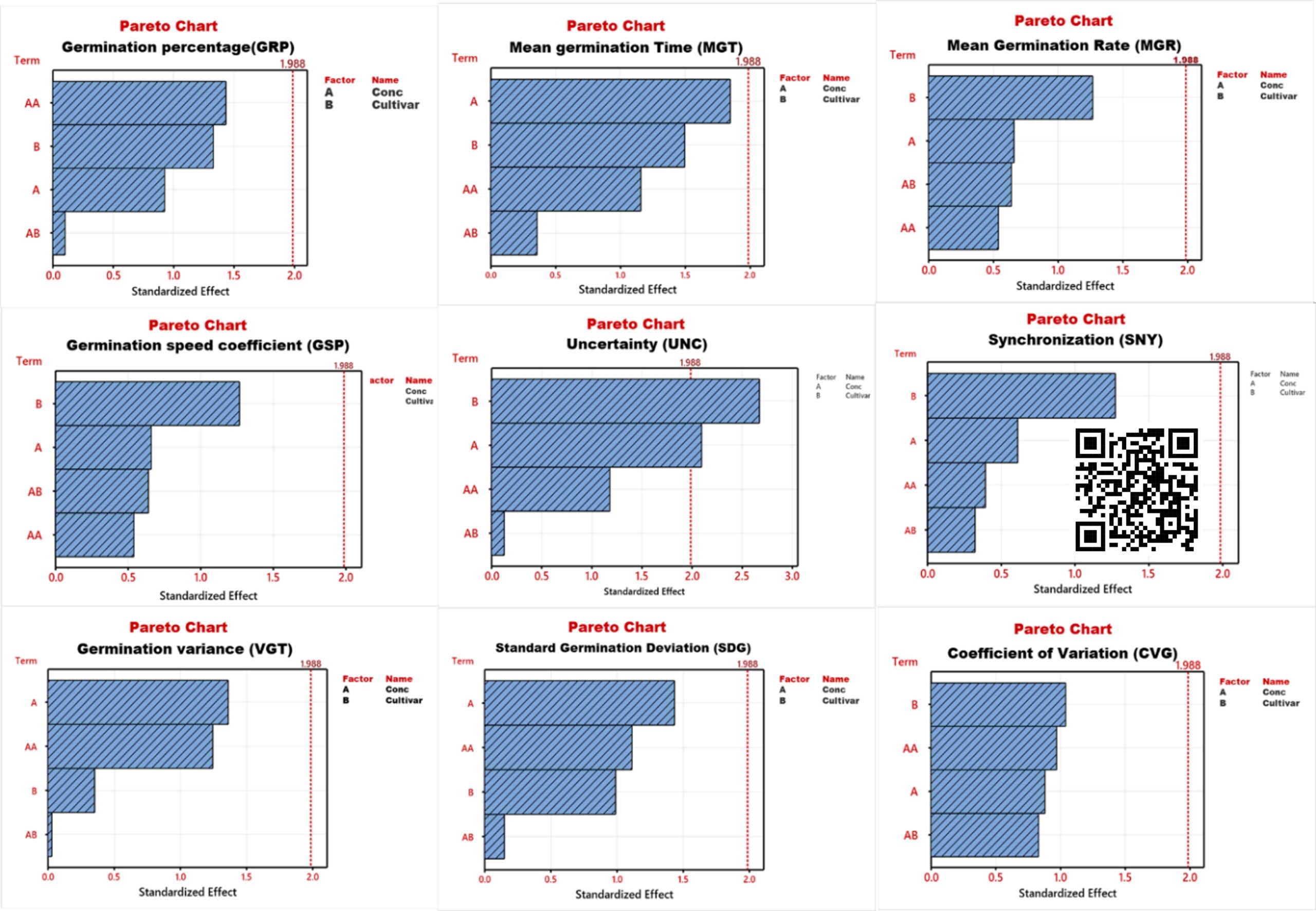
Fig. 3. Normal probability plots of ANOVA residuals for germination, vigor, and stress-related indices. Residuals for all individual indices (GRP, MGT, MGR, GSP, UNC, SYN, VGT, SDG, and CVG) show an approximately linear pattern, confirming normality and supporting the validity of ANOVA assumptions.
The results were further analyzed using normal plots to assess the distribution of output parameters associated with the center line. If the residuals align closely with the normal distribution line, this confirms the validity of the model and enhances its overall effectiveness (Sahin et al., 2023). Normal plot analysis evaluates both the measured variables and the associated errors that contribute to the deviations of these variables (Fig. 2). The findings revealed a positive correlation between cultivar and concentration B and A, as recorded for the UNC output parameters. Additionally, the results indicated a negative association among almost all other input and output parameters, which were predominantly inclined to the right side of the normal distribution line (Fig. 3).
.Impact of Multi-Walled Carbon Nanotubes on Seed Germination, multi-walled carbon nanotubes in agriculture, carbon nanotubes for seed germination, cotton seed germination enhancement, MWCNT seed priming, nanotechnology in cotton production
4. Conclusion
In conclusion, this study demonstrated that low to moderate doses of MWCNT enhance cotton seed germination. However, high doses decrease the germination rate due to nanoparticle stress. Among all traits assessed for germination and vigor, MWCNT concentration was the most significant factor. Among cultivars, only Esperia showed a distinct advantage for the UNC compared to ST-468 in the Taguchi analysis. The Response Surface Methodology identified significant effects primarily for UNC, while most other traits did not show significant results. Normal probability plots of residuals were generally acceptable, although some right-side deviations indicated that certain inputs were associated with lower outputs.
Impact of Multi-Walled Carbon Nanotubes on Seed Germination, multi-walled carbon nanotubes in agriculture, carbon nanotubes for seed germination, cotton seed germination enhancement, MWCNT seed priming, nanotechnology in cotton production
Acknowledgements: The study was conducted as a part of the doctoral thesis by the first author under the supervision of the last author. The authors are thankful to Prof. Dr. Sabit Horoz for providing carbon nanotubes for research.
Funding: The authors declare that no funds, grants, or other support were received during the preparation of this manuscript.
Conflict of interest: The authors declare that there are no conflicts of interest.
Author’s Contribution: Supervision: MA, Data curation: SNS, SRS, Methodology: SNS, MA, Writing original article: SNS, MA, Writing editing: SRS, Software: SNS, Visualization: SNS. All authors have read and agreed to the version of the manuscript.
List of Abbreviations: ANOVA: Analysis of Variance; CBNMs: Carbon-Based Nanomaterials; CNTs: Carbon Nanotubes; CSO: Cottonseed Oil; CVG: Coefficient of Variation of Germination Time; DOE: Design of Experiments; GRP: Germination Percentage; GSP: Germination Speed Coefficient; LB: Larger-the-Better; MGR: Mean Germination Rate; MGT: Mean Germination Time; MS: Murashige and Skoog; MWCNTs: Multi-Walled Carbon Nanotubes; RSM: Response Surface Methodology; SB: Smaller-the-Better; SDG: Standard Deviation of Germination Time; S/N: Signal-to-Noise Ratio; SYN: Synchronization Index; UNC: Uncertainty; VGT: Variance of Germination Time.
Impact of Multi-Walled Carbon Nanotubes on Seed Germination, multi-walled carbon nanotubes in agriculture, carbon nanotubes for seed germination, cotton seed germination enhancement, MWCNT seed priming, nanotechnology in cotton production
References
Aasim, M., E.M. Umer, and A. Karim. 2008. Yield and competition indices of intercropping cotton (Gossypium hirsutum L.) using different planting patterns. J. Agric. Sci. 14: 326–333. https://doi.org/10.1501/Tarimbil_0000001048
Aasim, M., F. Akin, S.A. Ali, M.B. Taskin, M.S. Colak, and K.M. Khawar. 2023b. Artificial neural network modeling for deciphering the in vitro induced salt stress tolerance in chickpea (Cicer arietinum L.). Physiol. Mol. Biol. Plants 29: 289–304. https://doi.org/10.1007/s12298-023-01282-z
Aasim, M., S.A. Ali, M.T. Altaf, A. Ali, A.A. Nadeem, and F.S. Baloch. 2023a. Artificial neural network and decision tree facilitated prediction and validation of cytokinin–auxin induced in vitro organogenesis of sorghum (Sorghum bicolor L.). Plant Cell Tissue Organ Cult. 153: 611–624. https://doi.org/10.1007/s11240-023-02498-3
Alemán-Méndez, M.A., D.K. Tiwari, G. Juárez-Cisneros, S.E. Borjas-García, and J. Villegas. 2024. Oxidizing and functionalizing multi-walled carbon nanotubes enhances germination and biomass in oat (Avena sativa L.). Metallomics 16: ozae044. https://doi.org/10.1093/mam/ozae044
Ali, M.H., J.-M. Sobze, T.H. Pham, M. Nadeem, C. Liu, L. Galagedara, M. Cheema, R. Thomas. 2020. Carbon nanotubes improved the germination and vigor of plant species from peatland ecosystem via remodeling the membrane lipidome. Nanomaterials 10: 1852. https://doi.org/10.3390/nano10091852
Aravind, J., S. Vimala Devi, J. Radhamani, S.R. Jacob, and K. Srinivasan. 2019. Germinationmetrics: Seed germination indices and curve fitting. Zenodo. https://doi.org/10.5281/zenodo.1219630
Barroso, L.T., T.M. Pereira, A.R.D. Cunha, P.D.O. Paiva, R. Paiva, F.C. Nery, and M.V.D. Reis. 2024. Seed priming with multi-walled carbon nanotubes improves germination and morphology in Clitoria ternatea L. Ornam. Hortic. 30: e242751. https://doi.org/10.1590/2447-536X.v30.e242751
Chhajer, A.K., S. Sen, R. Kumar, N. Singh, V. Wadhavan, P. Sharma, and T. Saini. 2023. Applications of carbon nanotubes in plant growth and development: A review. Res. J. Agric. Sci. 14: 1088–1095.
Dhanuskar, S., S.N. Naik, and K.K. Pant. 2025. Catalytic cracking and deoxygenation of cottonseed oil to yield light olefins over lanthanum-impregnated zeolite catalysts. Sustain. Energy Fuels. 9: 868–878. https://doi.org/10.1039/D4SE01037J
El-Moslamy, S.H., M.F. Elkady, A.H. Rezk, and Y.R. Abdel-Fattah. 2017. Applying Taguchi design for large-scale biosynthesis of nanosilver and its antifungal activity. Sci. Rep. 7: 45297. https://doi.org/10.1038/srep45297
Farhangi, H., V. Mozafari, H.R. Roosta, H. Shirani, and M. Farhangi. 2023. Optimizing growth conditions in vertical farming using the Taguchi method. Sci. Rep. 13: 6717. https://doi.org/10.1038/s41598-023-33855-z
Fernández-Gómez, D., J. Campos-García, G. Juárez-Cisneros, S.E. Borjas-García, D.K. Tiwari and J. Villegas. 2024. Multi-walled carbon nanotubes functionalized with cyclodipeptides improve seed germination and early development of Solanum lycopersicum. Microsc. Microanal. 30(1): ozae044.1003. https://doi.org/10.1093/mam/ozae044.1003
Fonseca, J.D.D.S., E. Wojciechowska, J. Kulesza, and B.S. Barros. 2024. Carbon nanomaterials in seed priming: Current possibilities. ACS Omega. 9: 44891–44906. https://doi.org/10.1021/acsomega.4c07230
Francis, D.V., A. Subhan, A.H.I. Mourad, A.K. Abdalla, and Z.F.R. Ahmed. 2024. Optimization of seed germination using nanoparticle priming through Taguchi analysis. Sci. Rep. 14: 15946. https://doi.org/10.1038/s41598-024-67025-6
Hao, Y., Y. Yu, G. Sun, X. Gong, Y. Jiang, G. Lv, Y. Zhang, L. Li, Y. Zhao, D. Sun, W. Gu, and C. Qian. 2023. Effects of multi-walled carbon nanotubes and nano-silica on root development, leaf photosynthesis, active oxygen, and nitrogen metabolism in maize. Plants 12: 1604. https://doi.org/10.3390/plants12081604
Iqbal, J., M.T. Altaf, M.F. Jan, W. Raza, W. Liaqat, I. ul Haq, and A. Mehmood. 2023. Genetic diversity in cotton genotypes using EST-SSR and ISSR markers. Sarhad J. Agric. 39: 800–814. https://doi.org/10.17582/journal.sja/2023/39.4.800.814
Jassim, A.Y., A. Karnwal, G. Pant, A. Gaur, M. Selvaraj, J. Dutta, R.S.K. Sachan, M. Kumar and N. Nesterova. 2025. Harnessing nanotechnology for abiotic stress mitigation in agriculture: a sustainable approach to crop resilience. J. Plant Interact. 20: 2586338. https://doi.org/10.1080/17429145.2025.2586338
Koca, A., and M. Aasim. 2015. Establishment of an efficient micropropagation system in bishop’s weed using seed explants. J. Anim. Plant Sci. 25: 478–484.
Kumar, M., M. Tomar, S. Punia, S. Grasso, F. Arrutia, J. Choudhary, S. Singh, P. Verma, A. Mahapatra, and S. Patil. 2021. Cottonseed: A sustainable contributor to global protein requirements. Trends Food Sci. Technol. 111: 100–113. https://doi.org/10.1016/j.tifs.2021.02.058
Li, Y., M. Liu, X. Yang, Y. Zhang, H. Hui, D. Zhang, and J. Shu. 2022. Multi-walled carbon nanotubes enhance antioxidative responses and alleviate salt stress in grape seedlings. Sci. Hortic. 293: 110698. https://doi.org/10.1016/j.scienta.2021.110698
Lin, J., J. Zhang, G. Zou, X. Zhang, H. Shang, B. Ji, Y. Bai, L. Qu, and Y. Wei. 2024. Enhancing the nutritional quality of defatted cottonseed meal by solid-state fermentation with probiotic microbes. Fermentation 10: 429. https://doi.org/10.3390/fermentation10080429
Liu, C., H. Zhou, and J. Zhou. 2021. The Applications of nanotechnology in crop production. Molecules. 26: 7070. https://doi.org/10.3390/molecules26237070
Mahakham, W., A.K. Sarmah, S. Maensiri and P. Theerakulpisut. 2017. Nanopriming technology for enhancing germination and starch metabolism of aged rice seeds using phytosynthesized silver nanoparticles. Sci. Rep. 7: 8263. https://doi.org/10.1038/s41598-017-08669-5
Maurya, K.K., A.D. Tripathi, D. Kumar, P.S. Panesar, V. Paul, and A. Agarwal. 2024. Standardization of process parameters for enhanced prodigiosin production from wheat bran using Taguchi methodology. Waste Biomass Valorization 15: 6159–6170. https://doi.org/10.1007/s12649-024-02448-w
Mousavi, S.M.R., H. Omidi, M.H.B. Keshavarzi, and S.H. Shojaei. 2025. Carbon nanotube-mediated drought stress tolerance in maize based on treatment × trait analysis. J. Plant Growth Regul. 44: 1–12. https://doi.org/10.1007/s00344-025-11631-9
Mukhtar, A., M.A. Naseer, M.F. Ali, and S. Jabeen. 2025. Beneficial roles of carbon nanotubes in seed germination physiology. In: Carbon Nanotubes in Agriculture. Academic Press: 27–42. https://doi.org/10.1016/B978-0-443-19047-6.00002-3
Murashige, T. and F. Skoog. 1962. A revised medium for rapid growth and bio assays with tobacco tissue cultures. Physiol. Plant. 15(3): 473-497. https://doi.org/10.1111/j.1399-3054.1962.tb08052.x
Mylsamy, P., E. Tamilmani, R. Venugopal, S. Murugaiyan, and U. Ranganathan. 2025. Cotton seed management: Traditional and emerging treatment approaches for enhanced productivity. J. Cotton Res. 8: 7. https://doi.org/10.1186/s42397-024-00209-7
Nalwade, A.R., and S.B. Neharkar. 2013. Carbon nanotubes enhance growth and yield of hybrid Bt cotton var. ACH-177-2. Int. J. Adv. Sci. Technol. 3: 840–846.
Orłowska, R., K.A. Pachota, J. Machczyńska, A. Niedziela, K. Makowska, J. Zimny, and P.T. Bednarek. 2020. Improvement of anther culture conditions using the Taguchi method in three cereal crops. Electron. J. Biotechnol. 43: 8–15. https://doi.org/10.1016/j.ejbt.2019.11.001
Özkat, G.Y., M. Aasim, A. Bakhsh, S.A. Ali, S. Özcan. 2025. Machine learning models for optimization, validation, and prediction of light emitting diodes with kinetin based basal medium for in vitro regeneration of upland cotton (Gossypium hirsutum L.). J. Cotton Res. 8: 19. https://doi.org/10.1186/s42397-025-00222-4
Razmi, B., R. Ghasemi-Fasaei, A. Ronaghi, and R. Mostowfizadeh-Ghalamfarsa. 2021. Investigation of factors affecting phytoremediation of multi-element polluted calcareous soil using Taguchi optimization. Ecotoxicol. Environ. Saf. 207: 111315. https://doi.org/10.1016/j.ecoenv.2020.111315
Riaz, U., S. Salman, L. Shahzad and N. Lodhi. 2025. Applications of carbon nanotubes in agriculture and environment under changing climate. In: Editor(s): M.H. Siddiqui, M.N. Khan, S. Mukherjee (Ed) Nanomaterial-Plant Interactions, Carbon Nanotubes in Agriculture. Academic Press. p. 119-147. https://doi.org/10.1016/B978-0-443-19047-6.00006-0
Sahin, G., G. Isik, and W.G. van Sark. 2023. Predictive modeling of PV solar power plant efficiency considering weather conditions: A comparative analysis of artificial neural networks and multiple linear regression. Energy Rep. 10: 2837–2849. https://doi.org/10.1016/j.egyr.2023.09.097
Santo Pereira, A.d.E., H. Caixeta Oliveira, L. Fernandes Fraceto and C. Santaella. 2021. Nanotechnology potential in seed priming for sustainable agriculture. Nanomaterials. 11: 267. https://doi.org/10.3390/nano11020267
Sharma, A., S.L. Kothari, and S. Kachhwaha. 2023. Impacts of multi-walled carbon nanotubes on the growth of pearl millet. J. Appl. Biol. Biotechnol. 11: 170–177. https://doi.org/10.7324/JABB.2023.11513
Shi, J., M. Xun, J. Song, J. Li, W. Zhang, and H. Yang. 2023. Multi-walled carbon nanotubes promote the accumulation, distribution, and assimilation of ¹⁵N-KNO₃ in Malus hupehensis by entering the roots. Front. Plant Sci. 14: 1131978. https://doi.org/10.3389/fpls.2023.1131978
Sigala-Aguilar, N.A., L.F. Salomé-Abarca, M.G. López, and F. Fernández-Luqueño. 2024. Bioactive metabolite upregulation in tomato seedlings (Solanum lycopersicum L.) through non-soil damaging foliar applications of multi-walled carbon nanotubes. Sci. Hortic. 338: 113603. https://doi.org/10.1016/j.scienta.2024.113603
Wang, M., G. Sun, G. Li, G. Hu, L. Fu, S. Hu, and W. Gu. 2024. Effects of multi-walled carbon nanotubes and nano-SiO₂ on key enzymes for seed germination and endogenous hormone level in maize seedling. Agronomy. 14: 2908. https://doi.org/10.3390/agronomy14122908
Yan, Z., T. Li, G. Zou, X. Zhang, L. Qu, and Y. Wei. 2025. Probiotic fermentation of defatted cottonseed meal for sustainable foods and non-food applications. Microorganisms 13: 1020. https://doi.org/10.3390/microorganisms13051020
Impact of Multi-Walled Carbon Nanotubes on Seed Germination, multi-walled carbon nanotubes in agriculture, carbon nanotubes for seed germination, cotton seed germination enhancement, MWCNT seed priming, nanotechnology in cotton production
_______________________________________________________________________________________________________________
Frequently Asked Questions (FAQs)
What are multi-walled carbon nanotubes (MWCNTs)?
Multi-walled carbon nanotubes (MWCNTs) are microscopic, hollow, tube-shaped nanomaterials composed of multiple concentric layers of graphene (a single sheet of carbon atoms arranged in a hexagonal lattice). They have remarkable mechanical strength, high surface area, excellent electrical conductivity, and superior thermal conductivity, making them important materials in nanotechnology, engineering, medicine, and agriculture.
In agriculture, MWCNTs are attracting considerable attention as nano-enabled materials for seed priming, enhanced seed germination, improved plant growth, and sustainable crop production. At appropriate concentrations, they have the potential to enhance water and nutrient uptake, stimulate early seedling development, and improve crop performance.
Impact of Multi-Walled Carbon Nanotubes on Seed Germination, multi-walled carbon nanotubes in agriculture, carbon nanotubes for seed germination, cotton seed germination enhancement, MWCNT seed priming, nanotechnology in cotton production

How do MWCNTs affect cotton seed germination?
Are carbon nanotubes safe for plants?
Whether carbon nanotubes (CNTs) are safe for plants depends heavily on their concentration and chemical makeup. Low doses can boost seed germination and water uptake, but high doses cause oxidative stress and cellular damage.
The safety of carbon nanotubes (CNTs) depends primarily on their type, concentration, chemical makeup, plant species, and method of application. At low or optimized concentrations, CNTs can boost seed germination, enhance water and nutrient uptake, stimulate plant growth, and increase tolerance to environmental stresses. However, high concentrations or prolonged exposure may inhibit germination, reduce root and shoot growth, induce oxidative stress, and cellular damage.
Carefully optimized doses of carbon nanotubes can be beneficial for agricultural applications. Nevertheless, additional studies are needed to fully understand their long-term environmental impacts, accumulation in plants, and safety for ecosystems and human health before they can be widely adopted in agriculture.
Practical Applications
Improve cotton seed germination through seed priming.
Enhance seed quality and seedling vigor.
Promote uniform crop establishment.
Optimize MWCNT application rates for safe and effective use.
Support sustainable and nano-enabled agricultural practices.
#CarbonNanotubes #MWCNT #SeedGermination #SeedPriming #CottonResearch #CropScience #PlantScience #Nanotechnology #AgriculturalNanotechnology #SustainableAgriculture #PrecisionAgriculture #ResearchArticle #OpenAccess #JEAS #AgriculturalResearch
Impact of Multi-Walled Carbon Nanotubes on Seed Germination, multi-walled carbon nanotubes in agriculture, carbon nanotubes for seed germination, cotton seed germination enhancement, MWCNT seed priming, nanotechnology in cotton production, carbon nanotubes in agriculture, agricultural nanotechnology, seed nanopriming, nanomaterials in crop production, cotton seed vigor, nanoparticle seed treatment, sustainable seed technology, nano-enabled agriculture, germination optimization, crop establishment.