
Journal of Environmental and Agricultural Sciences (JEAS). Nazeer et al., 2026. Volume 28(1&2): 1-10
Open Access – Research Article
Optimizing Nitrogen Fertilization and Plant Spacing for Higher Broccoli (Brassica oleracea L. var. italica) Yield and Quality in Semi-Arid Conditions
Wajid Nazeer1, Muhammad Haroon1, Khurram Ziaf 1,*, Muhammad Muzammil Jahangir1, Iftikhar Ahmad1, Mohsin Iqbal 2, Waheed Anwar 3, Muhammad Atif 4
1Institute of Horticultural Sciences, University of Agriculture, Faisalabad, Pakistan
2University of the West of England, Bristol, United Kingdom
3Constitute College of the University of Agriculture, Faisalabad (UAF), Okara, Pakistan
4Nuclear Institute for Agriculture and Biology, Faisalabad, Pakistan
Abstract
Broccoli (Brassica oleracea L. var. italica) is an emerging high-value vegetable in Pakistan, due to its nutritional and medicinal importance. However, optimized production practices, including recommendations for nitrogen (N) fertilization and plant spacing, for semi-arid subtropical conditions remain limited. A study was conducted to investigate the effects of N doses (0, 125, 250, 375, 500 kg N ha-1) and plant spacings (60×30, 60×45, 75×45 cm) on growth, yield and quality of broccoli cv. Marathon Field experiments were conducted over two consecutive years (2021-2022 and 2022-2023) at the Institute of Horticultural Sciences, University of Agriculture, Faisalabad, Pakistan, using a randomized complete block design (RCBD), with four replications. Results revealed that 250 kg N ha-1 significantly enhanced chlorophyll contents, leaf number, stem diameter, curd diameter, secondary curds yield and quality attributed [TA(titratable acidity), TSS (total soluble salts) and vitamin C]. While 500 kg N ha-1 maximized leaf area, plant fresh biomass (PFB), plant dry biomass (PDB), curd fresh weight (CFW), curd dry weight (CDW) and primary curd yield. Among plant spacing treatments, 60×45 cm optimized chlorophyll content, number of leaves, leaf area, PFB, PDB, curd diameter, CFW, CDW, yield of primary curds, TSS and TA. While 75×45 cm maximum stem diameter, number and yield of secondary curds, and vitamin C content. Overall, moderate nitrogen application (250 kg N ha-1) combined with 75×45 cm spacing provides a balanced strategy for improving yield and quality. For cultivars producing secondary curds, 75×45 cm spacing with 250 kg N ha-1 is recommended for higher yields and good quality curds under semi-arid conditions.
Keywords: Broccoli nitrogen fertilization, Broccoli yield optimization, plant population density, nitrogen use efficiency, sustainable fertilization, curd yield and quality.
*Corresponding author: Dr. Khurram Ziaf, khurramziaf@uaf.edu.pk
Optimizing Nitrogen Fertilization, Broccoli nitrogen fertilization, broccoli yield optimization, curd yield and quality, plant population density, nitrogen use efficiency, sustainable fertilization
Cite this article as
Nazeer, W., M. Haroon, K. Ziaf, M.M. Jahangir, I. Ahmad, M. Iqbal, W. Anwar, M. Atif. 2026. Optimizing Nitrogen Fertilization and Plant Spacing for Higher Broccoli (Brassica oleracea L. var. italica) Yield and Quality in Semi-Arid Conditions. Journal of Environmental & Agricultural Sciences. 28 (1&2): 1-10. [Abstract] [View Full-Text] [Citations] 
Copyright © Nazeer et al., 2026. This is an open-access article distributed under the terms of the Creative Commons Attribution License, which permits unrestricted use, distribution, and reproduction in any medium provided the original author and source are appropriately cited and credited.
_________
Optimizing Nitrogen Fertilization, Broccoli nitrogen fertilization, broccoli yield optimization, curd yield and quality, plant population density, nitrogen use efficiency, sustainable fertilization
Similar Articles Published in JEAS
- Hassan, I., G. Abbas, J. Hussain, Z. Abbas, T. Mehmoos, M. Amer, M.A. Bhatti, S. Hussain. 2023. Optimization of phosphorus and potassium fertilization rates for improving mungbean production under arid agroclimatic conditions of Thal, Punjab, Pakistan. Journal of Environmental & Agricultural Sciences. 25 (1&2): 27-36. [Abstract] [View Full-Text] [Citations]
- Dev, P., U. Singh, L.N. Singh, Y.S. Shivay, M. Kumar and P.R. Raiger. 2023. Zinc biofortification of mungbean (Vigna radiata L.) as influenced by varieties and zinc fertilization. Journal of Environmental & Agricultural Sciences. 25 (1&2): 1-17 [Abstract] [View Full-Text] [Citations]
- Abbas, Z., G. Abbas, J. Hussain, T. Mehmood, M. Amer, S. Hussain and M.N. Ahmad. 2021. Foliar application of macro and micronutrients enhances cotton production. Journal of Environmental & Agricultural Sciences. 23(3 & 4): 1-7. View Full-Text Download PDF Citations
- Ahmad, T., M.S. Mazhar, H. Ali, A. Batool and W. Ahmad. 2016. Efficacy of nutrient management on carrot productivity and quality: A review. Journal of Environmental & Agricultural Sciences. 7: 62-67. [Abstract] [View Full–Text] [Citations].
- Sattar, B., S. Ahmad, I. Daur, M.B. Hussain, M. Ali, T.U. Haq, M. Arif and M. Bakhtawer. 2021. Bioactive-sulfur coated diammonium phosphate improves nitrogen and phosphorus use efficiency and maize (Zea mays L.) yield. Journal of Environmental & Agricultural Sciences. 23(3&4): 23-29. View Full-Text Citations
- Basheer, A.K., A.B. Ali, N. A. Elshaikh and G.H. Agbna. 2023. Sustainable utilization of water resources in the agriculture sector of Sudan, after the secession of South Sudan. Journal of Environmental & Agricultural Sciences. 25(1&2): 51-66. [Abstract] [View Full-Text] [Citations]
- Majeed, Y., K. Ziaf, M.A. Ghani, I. Ahmad, M.A. Ahmad, K.Y. Abbasi, H. Mujahid and K.L. Cheema. 2020. Effect of different combinations of organic and synthetic sources of nutrients on growth, yield and quality parameters of turmeric under Faisalabad conditions. Journal of Environmental & Agricultural Sciences. 22(4): 1-7. [Abstract] [View Full-Text] [Citations]
- Ramzan, H., M.A. Tahir, G. Abbas and T. Mehmood. 2020. Potassium nutrient management in wheat through 4R nutrient stewardship. Journal of Environmental & Agricultural Sciences. 22(1):10-16. View Full-Text Citations
Test Your Knowledge
[Explore all MCQs]
[Horticulture MCQs] [Olericulture MCQs] [Plant Nutrition MCQs] [Agriculture MCQs][Crop and Environment MCQs] [Plant Physiology MCQs] [Soil Organic Matter MCQs]
[Soil Chemical Properties MCQs]
1. Introduction
1.1. Importance of Broccoli as a Functional Vegetable Crop
Broccoli (Brassica oleracea var. italica) is an Italian vegetable that is a rich source of minerals (Ca, K, Fe), vitamins (A, C, K), dietary fiber, antioxidants, polyphenols, and glucosinolates (Andrés et al., 2025; Bussler et al., 2025). It strengthens the human immune system and plays a critical role in preventing cardiac and cancerous diseases (Syed et al., 2023). Its use as a salad is considered excellent for weight loss due to its low-calorie and high fiber content. This vegetable is valued for its large sized head that is used as raw (salad purpose) or cooked (steamed, fried, roasted) (Nagraj et al., 2020). Usually, varieties produce a single head, also termed the primary head. But, some varieties also produce secondary heads, which increase the yield (Mansour et al., 2023; Shi et al., 2024). According to FAO, China and India are the leading producers of broccoli. Broccoli is cultivated on a limited area in Pakistan; during 2023-24, it was cultivated on 1718 ha, producing 22109 tonnes with an average yield of 12.87 tonnes ha-1 (FAOSTAT, 2024).
Broccoli, a rich source of minerals and vitamins, is increasingly recognized in Pakistan as a functional food due to its multiple health benefits. However, its production faces several constraints. From a consumption perspective, awareness of broccoli remains low among the general population; only health-conscious people know about it. From a production point of view, only 40% of farmers involved in the cultivation of high-value vegetable and medicinal crops are aware of this crop. Among the broccoli growers, one-third of the community is rarely familiar with its varieties (Shakeel et al., 2020). Inadequate awareness about crop-specific production technology is another major constraint. This can be attributed to limited research work about broccoli production technology, as broccoli growers generally follow cultural practices recommended for cauliflower production (Shakeel et al., 2020).
1.2. Constraints in Broccoli Production in Pakistan
Umar and Ayub (2024) studied the impact of irrigation levels and timings on broccoli yield grown in Peshawar and recommended that broccoli crop should be irrigated in the morning when 35% of the available water has been depleted. Latif et al. (2019) evaluated the response of two varieties (Galabrease and Rocco F1) to five planting dates and recommended the first week of October as the best planting time for both varieties in Dera Ismail Khan. However, many aspects of production are rarely studied, particularly the fertilizer requirements.
1.3. Nitrogen Fertilization and Its Agronomic Significance
Among plant nutrients, nitrogen (N) is a widely used fertilizer in intensive cropping systems, mainly attributed to its role in plant biomass production. However, its judicious application is crucial, as excessive N use has both economic and environmental consequences (Aziz et al., 2022), and can also deteriorate crop nutritional quality, including lower concentration of vitamin C (Albornoz, 2016).
Optimal crop N requirement is regulated by soil inherent nutritional status, soil type and its properties, cropping system, crop growth stage, irrigation method and several other factors (Ata-Ul-Karim et al., 2017; Bi et al., 2013; Govindasamy et al., 2023). Therefore, scientists have optimized nitrogenous fertilizer for broccoli cultivation in different regions of the world (Ferreira et al., 2023; Kim et al., 2021; Vieira et al., 2025).
Broccoli is sensitive to high N application rates; the incidence of hollow stem increases at higher N rates, particularly when applied five weeks after transplanting (Frieman et al., 2026; Kim et al., 2021). Recommended N dose is reportedly around 400 to 600 kg N ha-1 to obtain an early broccoli crop and a higher yield. Preplant application of N produced better results than split application. However, Yoldas et al. (2008) obtained the highest broccoli yield by applying 300 kg N ha-1.
1.4. Plant Spacing and Crop Productivity in Broccoli
Plant spacing is also an important agronomic practice to achieve high yield. An optimum number of plants per unit area contributes and assists plants in using available resources and inputs properly. It is very effective to achieve a high yield of good quality and uniform maturity in broccoli. Change in plant spacing per unit area gives a potnetial regulated size of curds and also affects several other quality parameters of broccoli (Madhumathi et al., 2017; Tuhin et al., 2025).
Plant spacing varies with soil conditions, climate and cultivar requirements. Generally, wider spacing results in vigorous vegetative growth primarily due to reduced competition for light, moisture and nutrients (Bairwa et al., 2017). Contrarily, closer spacing improves soil coverage, which not only protects soil but also suppresses weeds, enhances fertilizer use efficiency and can increase yield (Neto et al., 2016).
Plant spacing is therefore a critical determinant of yield of Cole crops (Tuhin et al., 2025). The size of the curd is an important marketing characteristic in broccoli and plant population density is one of the main factors affecting the curd size and broccoli quality traits. Competition between broccoli plants not only influences the curd size and overall plant growth but also affects other quality characteristics (Azam et al., 2020; Hasan et al., 2024).
1.5. Research Gap and Objectives of the Study
Despite the increasing popularity of broccoli in Pakistan, farmers largely rely on production practices developed for cauliflower (Shakeel et al., 2020). Previous studies in Pakistan have addressed specific aspects such as irrigation management (Umar and Ayub, 2024), planting time (Latif et al., 2019), and foliar application of biostimulants (Iqbal et al., 2023a); however, the combined effects of plant spacing and N nutrition remain insufficiently explored. Therefore, the present study was conducted to determine the optimal N dose and plant spacing for improving growth, curd yield, and quality of broccoli cv. Marathon.
2. Materials and Methods
1.1. Experimental Site, Design and Crop Management
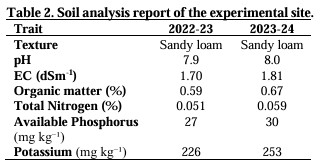
Broccoli cv. Marathon (SAKATA) seeds were obtained from a local supplier (Gujranwala, Pakistan). Seedlings were raised in plug trays using UAF Gro soilless media (Rasool et al., 2024) and transplanted (35 days after sowing, on one side of ridges) at the research field of Institute of Horticultural Sciences, University of Agriculture, Faisalabad (31.4336 °N, 73.0683 °E, 186 m a.s.l), Pakistan, on November 22, 2022 and November 21, 2023. Weather data and pre-sowing soil analysis are presented in Table 1, and Table 2.
Table 1. Monthly mean Metrological data of experimental site during 2022–23 and 2023–24
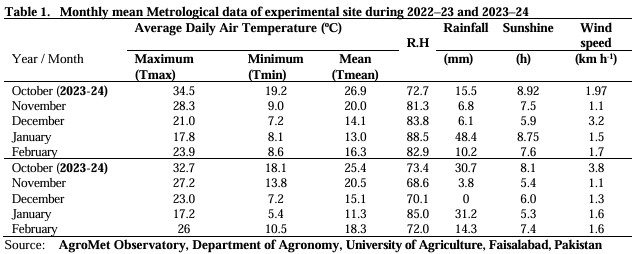
Two independent experiments were conducted in a randomized complete block design (RCBD) with four replications, without testing N × spacing interaction. In Exp-1, five N levels (0, 125, 250, 375, 500 kg N ha-1) were evaluated at 75×30 cm plant spacing. In Exp-2, three plant spacing treatments (60×30, 60×45, 75×45 cm) were tested at 375 kg N ha⁻¹. Irrigation and recommended pest and disease management were carried out to minimize plant stress.
Table 2. Soil analysis report of the experimental site
2.2. Data Collection and Biochemical Analysis
From each replication of every treatment, five plants were randomly selected. Plant height was measured from the base (soil level) to the top of the apical leaf of the plant with the help of a measuring tape. Number of leaves on the main axis (later referred to as primary leaves) and lateral shoots (secondary leaves) per plant were counted. Primary leaves of the selected plants were scanned using a portable leaf area meter to calculate the leaf area per plant. The chlorophyll content index of two healthy leaves from the primary/main axis of each selected plant was determined with the help of a SPAD chlorophyll meter. Plants were uprooted after harvesting of curds and excised into shoots and roots with the help of a sickle to measure the fresh weight of the plant by using a digital weighing balance. Stem diameter was recorded with the help of a digital Vernier caliper. After harvesting the primary (main) curd, the diameter was measured and the weight was noted. The shoots arising from the leaf axils developed secondary curds; number and yield of secondary curds were also recorded.
Total soluble solids (TSS) of broccoli juice were measured using a digital refractometer (ATAGO RS-5000, Japan), calibrated with distilled water. Titratable acidity (TA) was determined by titrating fresh curd juice (10 ml) against 0.1 N NaOH using phenolphthalein as an indicator. Ascorbic acid content was quantified by titrating a filtered aliquot (5 ml) of juice, prepared in 0.4% oxalic acid, against 2,6-dichloroindophenol dye.
2.3. Statistical Analysis
Statistix8.1® software (Analytical Software, Tallahassee, USA) was used to analyze data using the Analysis of Variance (ANOVA) technique, whereas significant differences among treatment means were compared by Tukey’s test at 5% probability level (Steel et al., 1997).
3. Results
3.1. Experiment 1
3.1.1. Vegetative Growth Attributes in Response to Nitrogen
The application of N showed a significant effect on the vegetative parameters of broccoli. Maximum plant height, chlorophyll contents, and number of leaves were achieved in T3 (250 kg N ha-1) during both years of the trial (Table 3). However, highest value for leaf area (294.2 cm2, 259.11 cm2), plant fresh biomass (1482.8 g, 1305.1 g) and plant dry biomass (190.3 g, 187.1 g) was recorded from T5 (500 kg N ha-1) during both years, but was statistically similar to T3 (250 kg N ha-1) for these traits, except for leaf area during 1st year. Contrarily, the lowest values for leaf area, plant fresh biomass and dry biomass were achieved in the T1 (control) treatment (Table 3).
Table 3. Effect of different nitrogen doses on vegetative growth parameters of broccoli

3.1.2. Yield and Related Attributes in Response to Nitrogen Levels
The application of nitrogen significantly improved almost all yield related parameters of broccoli. Maximum diameter of curd (115.2mm, 116.2mm) was attained in T3 (250 kg N ha-1) in both years. Contrarily, the lowest value was recorded from T1 (control). Mean fresh and dry weight of the broccoli curds was increased with increasing the dose of nitrogen fertilizer; maximum from the highest dose T5 (500 kg N ha-1), while the lowest value was noted from T1 (control). Average yield of primary curds was highest (9769.5 g, 9977.6 g 12.1 m–2) from the T5 (500 kg N ha-1) during both years. However, the number of secondary curds and their yield were lowest for T5 (500 kg N ha-1), even lower than the control, although both were statistically similar. Highest value for the number of secondary curds (8.41, 7.58) and yield (12094.6 g, 13080 g 12.1 m–2) was observed for T3 (250 kg N ha-1) during both years (Table 4).
Table 4. Effect of different nitrogen doses on reproductive growth parameters of broccoli
3.1.3. Effect of Nitrogen on Biochemical parameters
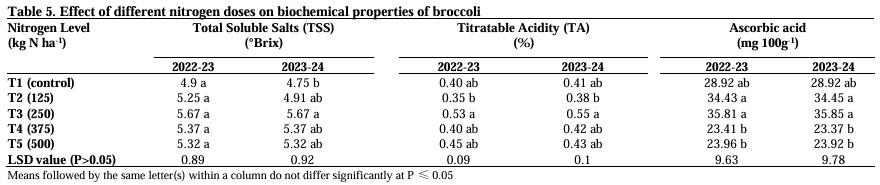
The application of N also affected the biochemical properties of broccoli. The highest values for TSS, TA and vitamin C values were noted from the T3 (250 kg N ha-1); being 86.4% and 83.8% higher TSS, 75.5% and 74.5% higher TA, and 80.8% and 80.8% higher vit. C than control during both years. The lowest values for TSS, TA and vitamin C were noted from T1 (control), T2 (125 kg N ha-1) and T5 (500 N kg N ha-1), respectively (Table 5).
Table 5. Effect of different nitrogen doses on biochemical properties of broccoli
3.2. Experiment 2
3.2.1. Effect of Plant Spacing on Vegetative Traits
Different plant spacings significantly affected the vegetative growth parameters of broccoli. Maximum plant height was demonstrated in T3 (75×45 cm) during both years of trial, but it was statistically at par with T1 (60×30 cm). However, chlorophyll contents, number of leaves and leaf area of broccoli were significantly higher for T2 (60×45 cm). Maximum value for plant fresh (1734.8 g, 1825.1 g) and dry biomass (166.1 g, 168.4 g) was recorded for T2 (60×45 cm), consistent across experimental years. The lowest values for leaf area, plant fresh and dry biomass were noted from T1 (60×30 cm). Stem diameter of broccoli was increased with increasing the plants spacing; maximum value was noted from the 75×45 plant spacing in across the experimental years (34.16 mm, 33.55 mm) (Table 6).
Table 6. Vegetative growth response of broccoli to different plant spacings

Different plant spacings significantly impacted almost all reproductive parameters of broccoli. Maximum curd diameter (125.3mm, 125.6mm) was observed in T2 (60×45 cm) in both years trial, but was statistically similar to T3 (75×45 cm) in both years and with T1 (60×30 cm) during first year. Highest fresh (239.7, 235.9 g) and dry (22.81, 25.30 g) weight of broccoli curds was recorded from T2 (60×45 cm), while the lowest curd fresh and dry weight was attained from T3 (75×45 cm). Yield of primary curds was highest (1750.7 g, 1870.7g) from T2 during both years followed by T1 and the lowest value was noted from T3. Number of secondary curds (6.88, 6.51) and their yield (2648.1, 2648.3 g) were highest for T3 (75×45 cm), while the lowest value was recorded from T1 (60×30 cm) during both years (Table 7).
Table 7. Effect of different plant spacings on reproductive growth parameters of broccoli

3.2.2. Yield and Related Attributes of Broccoli in Response to Different Plant Spacings
Different plant spacings significantly affected the biochemical properties of broccoli. The highest values for TSS (5.56, 5.56 °Brix) and TA (0.57%, 0.44%) were achieved under treatment T2 (60×45 cm plant spacing) followed by T3 (75×45 cm). Highest vitamin C (35.76, 36.76 mg 100g-1) was noted from T3 (75×45 cm), followed by (60×45 cm). The lowest values for TSS, TA and vitamin C were noted from T1 (60×30 cm) (Table 8).
Table 8. Effect of different plant spacings on biochemical properties of broccoli

4. Discussion
4.1 Effect of Nitrogen Rates
Intensive cropping systems prevailing around the globe demand more fertilizers to produce higher yields; nitrogenous fertilizers are at the top. Nitrogen is the basic building block of amino acids and nucleic acids. However, its sensible use is necessary because excessive use may not only reduce the profitability but also contribute to soil and water pollution (Aziz et al., 2022).
Therefore, it was imperative to investigate the most suitable dose of nitrogenous fertilizer for improved curd yield as well as physio-chemical properties of broccoli. The results of this study revealed that different N doses had a significant effect on growth and yield related parameters of broccoli. Highest values for vegetative parameters (leaf area, fresh and dry biomass) were achieved from treatment T5 (500 kg N ha-1), while plant height, chlorophyll content and stem diameter were higher in T3 (250 kg N ha-1); both T3 and T5 were statistically similar for most of the traits.
Giri et al. (2013) also reported the tallest plants and maximum number of leaves of broccoli under N supplementation at 100 to 200 kg N ha-1 in Nepal. Qadir et al. (2017) did not find any change in chlorophyll content of the crop with a change in the N doses, that support findings of this study. Moniruzzaman et al. (2007) found maximum number of leaves of broccoli for 197.7 kg N ha-1, which partially support result of this study. So, increasing N from 250 to 500 kg N ha-1 resulted in highest vegetative growth of broccoli. Leaf area increase has been associated with increased photosynthesis (Li et al., 2022) that might have possibly increased fresh and dry weight of broccoli (Gulias et al., 2003), indicating enhanced availability of photosynthates for curd formation.
This likely resulted in higher curd fresh and dry weight 250 to 500 kg N ha-1 than the control. Similarly, yield of primary and secondary curds was increased with increasing N dose. However, yield of secondary curds was higher from 250 kg N ha-1 treatment than all others, and it was possibly due to a higher number of secondary curds.
Recent studies indicate that optimal N requirements for broccoli are generally lower than previously reported. A study conducted in middle Gujarat, India, demonstrated that maximum curd yield was achieved with 200 kg N ha⁻¹ combined with 75 kg P and 50 kg K ha⁻¹, consistently outperforming lower fertilization rates across multiple growing seasons (Giri et al., 2013). Similarly, Kim et al. (2021) reported that optimal broccoli yields in California were obtained within the range of 200–250 kg N ha⁻¹, highlighting improved nitrogen use efficiency at moderate application rates.
Surprisingly, higher N application rate i.e., above 250 kg N ha-1, decreased curd vitamin C content. Slosar et al. (2016) also reported a reduction in vitamin C content of broccoli curd due to an increase in N application rate. Nitrogen application rates were negatively correlated with vitamin C contents of crisphead lettuce, cabbage and potato (Lee and Kader, 2000). Previously, Metwaly (2016) also reported a decline in vitamin C content of broccoli curd at N application rate above 173 kg N ha-1, which partially corresponds to the result presented in this study.
Plant water uptake was positively correlated with N application rate (Li et al., 2024) and decreasing soil moisture increased vitamin C content of broccoli curd (Erken and Kuzucu, 2013). So, higher nitrogen application rates (150 and 200 kg N acre-1) might have increased water uptake by the broccoli plants, which possibly had decreased the vitamin C content of broccoli curd in the current study. TSS and titratable acidity were also increased up to 250 kg N ha-1 and then declined, which is also in partial accordance with the findings of Metwaly (2016).
4.2 Effect of Plant Spacing
Closer spacing (60×30 cm) decreased number of leaves and leaf area of broccoli compared to wider spacing (60×45 cm and 75×45 cm), with a maximum at 60×45 cm, which is in accordance with the findings earlier reported (Madhumathi et al., 2017). Higher photosynthesis resulting from this enhanced leaf area can be the reason of higher fresh and dry biomass at wider spacings than closer spacing (60×30 cm). However, there was no significant increase in curd fresh and dry weight at wider spacing (60×45 cm), rather a decline in values was noted at 75×45 cm. These results are in partial agreement with the findings of previous studies (Kumar et al., 2021). Accordingly yield of primary curds declined at widest spacing (75×45 cm) and was maximum at 60×45 cm. However, the number of secondary curds and their yield was highest at the widest spacing (75×45 cm) followed by 60×45 cm. So, cultivars with a higher number of secondary curds should be planted at the widest spacing and those without secondary curds should be planted at the closest spacing. High yield of primary curd from 60×45 cm compared to 60×30 cm supports results of this study. Tuhin et al (2025) also demonstrated highest yield of secondary curds at 60×40 cm that partially support findings of this study for 60×45 cm. Findings of Basak et al. (2022) strengthen our view of higher secondary curd yield from wider (60×45 cm) spacing than closer spaced plants (60×30 cm).
Curd quality was improved at wider spacing as evident from higher values of TSS, TA and ascorbic acid at 60×45 cm and 75×45 cm, possibly because of increased photosynthesis leading to higher carbohydrate accumulation (Kumar et al., 2021). Therefore, increased levels of TSS and vitamin C as compared to densely grown plants. Singh et al. (2022) also concluded that broccoli curd quality was decreased due to closer spacing, that confirm results of the present study.
Improving nitrogen use efficiency (NUE) is critical for maintaining productivity while reducing fertilizer inputs and environmental impacts (Ali et al., 2025). Climate-smart and precision nutrient management approaches demonstrate that moderate nitrogen rates (200–300 kg N ha⁻¹), particularly when integrated with organic amendments, can optimize yield, enhance efficiency, and minimize losses. These findings reinforce the importance of sustainable nitrogen management for resilient crop production systems (Iqbal et al., 2023b; Govindasamy et al., 2023).
5. Conclusion
Fertilizer application should be guided by soil fertility status; however, under the studied agroclimatic conditions, nitrogen rates of 250–500 kg ha⁻¹ enhanced both primary and secondary curd yield. For improved nutritional quality, particularly higher vitamin C content, lower nitrogen levels (125–250 kg ha⁻¹) are recommended. Optimal plant spacing significantly differs across cultivar types. Farmers can achieve maximum primary curd by using 60×45 cm spacing for varieties producing primary curds, whereas 75×45 cm spacing favors higher production of secondary curds. Overall, moderate nitrogen application combined with appropriate plant spacing offers a balanced strategy for maximizing yield and quality. Further research should focus on the interactive effects of nitrogen, soil moisture, and plant spacing on curd yield and quality of broccoli for site-specific recommendations.
Acknowledgements: The first author is highly thankful to his supervisor and co-author, Dr. K. Ziaf, for his support throughout the research work till the submission of this research paper.
Funding: The authors declare that no funds, grants, or other support were received during the preparation of this manuscript.
Conflict of interest: The authors declare that there are no conflicts of interest.
Author’s Contribution: Supervision: MA, Data curation: SNS, SRS, Methodology: SNS, MA, Writing original article: SNS, MA, Writing editing: SRS, Software: SNS, Visualization: SNS. All authors have read and agreed to the version of the manuscript.
Optimizing Nitrogen Fertilization, Broccoli nitrogen fertilization, broccoli yield optimization, curd yield and quality, plant population density, nitrogen use efficiency, sustainable fertilization
References
Abd El-All, H.M. 2014. Improving growth, yield, quality and sulphoraphan content as anticancer of broccoli (Brassica oleracea L. var. italica) plants by some fertilization treatments. Middle East J. Agric. Res. 3(1):13-19.
Albornoz, F. 2016. Crop responses to nitrogen overfertilization: A review. Sci. Hortic. 205:79-83. https://doi.org/10.1016/j.scienta.2016.04.026
Ali, A., N. Jabeen, R. Farruhbek, Z. Chachar, A.A. Laghari, S. Chachar, N. Ahmed, S. Ahmed, Z. Yang. 2025. Enhancing nitrogen use efficiency in agriculture by integrating agronomic practices and genetic advances. Front. Plant Sci. 16:1543714. https://doi.org/10.3389/fpls.2025.1543714
Alvi, A.K., M. Ahmad, A. Riffat and M.Y. Ashraf. 2021. Comparative efficacy of various nitrogen fertilizers in improving growth of cluster bean. Pak. J. Agric. Sci. 58(3):975-984. https://doi.org/10.21162/PAKJAS/21.1217
Andrés, C.M.C., J.M. Pérez de la Lastra, E.B. Munguira, C.A. Juan, E. Pérez-Lebeña. 2025. The multifaceted health benefits of broccoli—A review of glucosinolates, phenolics and antimicrobial peptides. Molecules 30: 2262. https://doi.org/10.3390/molecules30112262
Ata-Ul-Karim, S.T., Y. Zhu, Q. Cao, M.I.A. Rehmani, W. Cao and L. Tang. 2017. In-season assessment of grain protein and amylose content in rice using critical nitrogen dilution curve. Eur. J. Agron. 90: 139-151. https://doi.org/10.1016/j.eja.2017.08.001
Azam, M.G., A. Rashid, S. Chowdhury, M.S. Husnain and M.J. Uddin. 2020. Effect of spacing and curd management on quality seed production and profitability of broccoli var. BARI broccoli-1. Int. J. Agric. Sci. Engg. Innov. 1: 28-32. http://doi.org/10.5281/zenodo.4509622
Aziz, T., A. Wakeel, A. N. Shahzad, R. Rees and M. Sutton. 2022. Rethinking nitrogen use: need to plan beyond present. In: T. Aziz, A. Wakeel, M. A. Watto, M. Sanaullah, M.A. Maqsood, and A. Kiran (eds.), Nitrogen Assessment, Academica Press, UK. pp. 1- 11. https://doi.org/10.1016/B978-0-12-824417-3.00007-1
Bairwa, R.K., A.K. Mahawar, S.P. Singh and P. Gocher. 2017. Influence of sulfur dose and spacing on quality attributes and economics of knol-khol (Brassica oleracea var. gongylodes L.) variety early White Vienna. Chem. Sci. Rev. Lett. 6:933-938.
Basak, T., M.H. Rahman, M.A. Islam and A. Yasmin. 2022. Growth and yield of broccoli (Brassica oleracea L. var. italica) influenced by organic, inorganic fertilizers and plant spacing. Curr. Rese. Agri. Far. 3(3):1-12. http://dx.doi.org/10.18782/2582-7146.165
Bi, J., Z. Liu, Z. Lin, M.A. Alim, M.I.A. Rehmani, G. Li, Q. Wang, S. Wang and Y. Ding. 2013. Phosphorus accumulation in grains of japonica rice as affected by nitrogen fertilizer. Plant and Soil 369: 231-240. https://doi.org/10.1007/s11104-012-1561-4
Bussler, W., K. De Zego, H. Chandler, R.W. Reid and S. Komarnytsky. 2025. Nutrient–nutrient interactions among broccoli glucosinolates and their implications for breeding cruciferous crops to enhance human health. Nutrients 17: 344. https://doi.org/10.3390/nu17020344
Erken, O., C.O. Kuzucu. 2013. Impacts of deficit irrigation applied at different growth stages on vitamin C contents of broccoli. Ege Üniv Ziraat Fak Derg 50: 277-283.
FAOSTAT. 2024. Food and Agriculture Organization of the United Nations, Statistics Division. [Assessed at June 6, 2024] https://www.fao.org/statistics/en
Ferreira, J.J., J.L.R. Torres, H.C.D.O. Charlo, V. Orioli, A. Loss and A.C. Barreto. 2023. No-till broccoli production using different cover crop residues and nitrogen doses. Hortic. Bras. 41: e2479. https://doi.org/10.1590/s0102-0536-2023-e2479
Frieman, A., C. Vorsatz, H.-G. Schön and D. Daum. 2026. Influence of vegetative growth and head traits on the hollow stem formation in broccoli affected by cultivation factors. Agronomy 16: 42. https://doi.org/10.3390/agronomy16010042
Giri, R.K., M.D. Sharma, S.M. Shakya, G.C.Y. Dhoj and T.P. Kandel. 2013. Growth and yield responses of broccoli cultivars to different rates of nitrogen in western Chitwan, Nepal. Agric. Sci. 4:8-12. https://doi.org/10.4236/as.2013.47A002
Govindasamy, P., S.K. Muthusamy, M. Bagavathiannan, J. Mowrer, P.T.K. Jagannadham, A. Maity, H.M. Halli, S. G. K., R. Vadivel, D.T.K., R. Raj, V. Pooniya, et al. 2023. Nitrogen use efficiency—a key to enhance crop productivity under a changing climate. Front. Plant Sci. 14: 1121073. https://doi.org/10.3389/fpls.2023.1121073
Gulias, J., J. Flexas, M. Mus, J. Cifre, E. Lefi and H. Medrano. 2003. Relationship between maximum leaf photosynthesis, nitrogen content and specific leaf area in balearic endemic and non-endemic mediterranean species. Ann. Bot. 92(2):215-22. https://doi.org/10.1093/aob/mcg123
Hasan, M., K. Khatun, T. Mostarin, K. Karishma, M. Nadim and S. Chowdhury. 2024. Influence of Vermicompost and Biofertilizer on growth, head yield and quality of Broccoli (Brassica oleracea L. var. italica). Agric. Sci. Technol. 16(1): 54-62. http://doi.org/10.15547/ast.2024.01.006
Iqbal, S., J. Xu, S. Khan, F.R. Worthy, H.Z. Khan, S. Nadir, S. Ranjitkar. 2023b. Regenerative fertilization strategies for climate-smart agriculture: Consequences for greenhouse gas emissions from global drylands. J. Cleaner Prod. 398: 136650. http://doi.org/10.1016/j.jclepro.2023.136650
Iqbal, W., C.M. Ayyub, M.M. Jahangir and R. Ahmad. 2023a. Effect of foliar application of bio-stimulants on growth, yield and nutritional quality of broccoli. Braz. J. Biol. 83: e263302. https://doi.org/10.1590/1519-6984.263302
Kim, S., S. Kim, J.R. Kiniry and K.M. Ku. 2021. A hybrid decision tool for optimizing broccoli production in a changing climate. Hortic. Environ. Biotechnol. 62: 299-312. https://doi.org/10.1007/s13580-020-00317-8
Kumar, P., S. Kumar, M.L. Meena, R. Kumar, R. Rawat and S. Yadav. 2021. Influence of varieties and spacing on yield and quality of sprouting broccoli (Brassica oleracea L.). Ann. Plant Soil Res. (1): 108-111. https://doi.org/10.47815/apsr.2021.10039
Lee, S.K. and A.A. Kader. 2000. Preharvest and postharvest factors influencing vitamin C content of horticultural crops. Postharvest Biol. Technol. 20: 207–220. https://doi.org/10.1016/S0925-5214(00)00133-2
Li, X., H. Noor, F. Noor, P. Ding, M. Sun and Z. Gao. 2024. Effect of soil water and nutrient uptake on nitrogen use efficiency, and yield of winter wheat. Agronomy. 14(4):819. https://doi.org/10.3390/agronomy14040819
Li, Y., B. Ming, P. Fan, Y. Liu, K. Wang, P. Hou, J. Xue, S. Li and R. Xie. 2022. Quantifying contributions of leaf area and longevity to leaf area duration under increased planting density and nitrogen input regimens during maize yield improvement. Field Crops Res. 283:108551. https://doi.org/10.1016/j.fcr.2022.108551
Liu, C.W., Y. Sung, B.C. Chen, and H.Y. Lai. 2014. Effects of nitrogen fertilizers on the growth and nitrate content of lettuce (Lactuca sativa L.). Int. J. Environ. Res. Public Health. 11:4427-4440. https://doi.org/10.3390/ijerph110404427
Madhumathi, T.C., S.S. Reddy and D.S. Reddy. 2017. Effect of planting density and transplanting time on growth and curd yield of broccoli. Int. J. Hort. Floric. 5(4):301-303.
Mansour, A., Y. Salama, M. Mohamed and A. Shams. 2023. Effect of planting date, boron forms on growth, head yield and quality of broccoli plants. Sci. J. Agric. Sci. 5: 37-48. https://doi.org/10.21608/sjas.2023.185065.1277
Metwaly, E. E. 2016. Effect of nitrogen and boron fertilization on yield and quality of broccoli. J. Plant Prod. 7(12): 1395-1400. https://doi.org/10.21608/jpp.2016.47068
Nagraj, G.S., A. Chouksey, S. Jaiswal, A.K. Jaiswal, 2020. Broccoli. In: Jaiswal, A.K. (Ed.), Nutritional Composition and Antioxidant Properties of Fruits and Vegetables. Academic Press, pp. 5-17. https://doi.org/10.1016/B978-0-12-812780-3.00001-5
Neto, E.E., C.G.S. Benett, E.C.M.D. Santos, T.N.H. Reboucas and E. Costa. 2016. Plant spacing and boron (B) top dressing fertilization for purple cabbage crop (Brassica oleracea var. capitata) variety purple giant. Aust. J. Crop Sci. 10:1529-1533. https://doi.org/10.21475/ajcs.2016.10.11.PNE67
Optimizing Nitrogen Fertilization, Broccoli nitrogen fertilization, broccoli yield optimization, curd yield and quality, plant population density, nitrogen use efficiency, sustainable fertilization
Qadir, O., M. Siervo, C.J. Seal and K. Brandt. 2017. Manipulation of contents of nitrate, phenolic acids, chlorophylls, and carotenoids in lettuce (Lactuca sativa L.) via contrasting responses to nitrogen fertilizer when grown in a controlled environment. J. Agric. Food Chem. 65:10003-10010. https://doi.org/10.1021/acs.jafc.7b03675
Rasool, S., I. Ahmad, K. Ziaf and M. Naveed. 2024. Plant growth promoting rhizobacteria incorporated soilless substrates – A potential arena for high quality nursery production of ornamentals. Sci. Hortic. 326:112745. https://doi.org/10.1016/j.scienta.2023.112745
Shakeel, M., S. Nawaz, Y. Saleem, S. Shafique, A. Tahir and M. Riaz. 2020. Broccoli: Introduction and adoption constraints in Pakistan. Sarhad J. Agric. 36(2): 526-532. http://dx.doi.org/10.17582/journal.sja/2020/36.2.526.532
Shi, L., Y. Li, M. Lin, Y. Liang and Z. Zhang. 2024. Profiling the bioactive compounds in broccoli heads with varying organ sizes and growing seasons. Plants 13: 1329. https://doi.org/10.3390/plants13101329
Singh, S., S. Kumar, S.P. Singh, S. Yadav, S. Yadav, A. Singh and M.K. Awasthi. 2022. Effect of Plant spacing and cultivar on quality attributes in sprouting broccoli. S. Afr. J. Bot. 148:737-741. https://doi.org/10.1016/j.sajb.2022.04.049
Slosar, M., A. Uhe, A. Andrejiova and T. Jurikova. 2016. Selected yield and qualitative parameters of broccoli in dependence on nitrogen, sulfur, and zinc fertilization. Turk. J. Agric. For. 40:465-473. https://doi.org/10.3906/tar-1501-99
Steel, R.G.D., J.H. Torrie and D.A. Dickey. 1997. Principles and Procedures of Statistics. A Biometrical Approach, 2nd ed. McGraw Hill Book Co., New York.
Syed, R.U., S.S. Moni, M.K.B. Break, W.M.A. Khojali, M. Jafar, M.D. Alshammari, K. Abdelsalam, S. Taymour, K.S.M. Alreshidi, M.M.E. Taha and S. Mohan. 2023. Broccoli: A multi-faceted vegetable for health: An in-depth review of its nutritional attributes, antimicrobial abilities, and anti-inflammatory properties. Antibiotics. 12(7):1157. https://doi.org/10.3390/antibiotics12071157
Tuhin, K.B.M.O.F., M.R. Karim, F. Akter, M.A. Hossain, M.L. Mia and M.S. Islam. 2025. Influence of plant spacing and NPK fertilizers on growth and yield of broccoli. Asian J. Agric. Hort. Res. 12(1):20–36. https://doi.org/10.9734/ajahr/2025/v12i1356
Vieira, D.M.D.S., R.D. Camargo, M.H.R. Franco, V. Orioli Júnior, C.C.D. Oliveira, A. Loss, F.A.D. Júnior, M.M.A.P.D.M. Silva and J.L.R. Torres. 2025. Agronomic and physicochemical quality of broccoli cultivated under different fertilizers and phosphorus rates. Horticulturae 11: 873. https://doi.org/10.3390/horticulturae11080873
Yoldas, F., S. Ceylan, B. Yagmur and N. Mordogan. 2008. Effects of nitrogen fertilizer on yield quality and nutrient content in broccoli. J. Plant Nutr. 31:1333-1343. https://doi.org/10.1080/01904160802135118
Optimizing Nitrogen Fertilization, Broccoli nitrogen fertilization, broccoli yield optimization, curd yield and quality, plant population density, nitrogen use efficiency, sustainable fertilization
Did You Know?
Broccoli contains more vitamin C than many citrus fruits on a fresh-weight basis.
Excess nitrogen can reduce broccoli vitamin C content.
Plant spacing influences both curd size and marketable yield.
Broccoli is rich in glucosinolates, compounds associated with human health benefits.
Moderate nitrogen application generally improves nitrogen use efficiency while reducing environmental losses.
Frequently Asked Questions (FAQs)
- Why is broccoli considered a functional food?
- What is nitrogen use efficiency (NUE)?
- What are the symptoms of nitrogen deficiency in broccoli?
- What are the effects of excessive nitrogen?
- How does plant spacing influence light interception?
- What causes hollow stem in broccoli?
- Which broccoli spacing is suitable for commercial farming?
- Why is vitamin C reduced by excessive nitrogen?
- What is chlorophyll’s role in crop productivity?
- How can farmers reduce nitrogen losses?