
JEAS-Blog (February 2026)
Plant-Microbiome Interaction for Sustainable Rice Production
Rice is a primary staple food for billions of people across the globe, especially in Asia. It provides essential calories and nutrition for daily sustenance. Rice yield gains in many regions remain insufficient to meet its increasing demand. Conventional nitrogen-intensive fertilization has increased productivity but contributed to soil degradation and water pollution, underscoring the need for microbiome-based nutrient management strategies in rice systems.
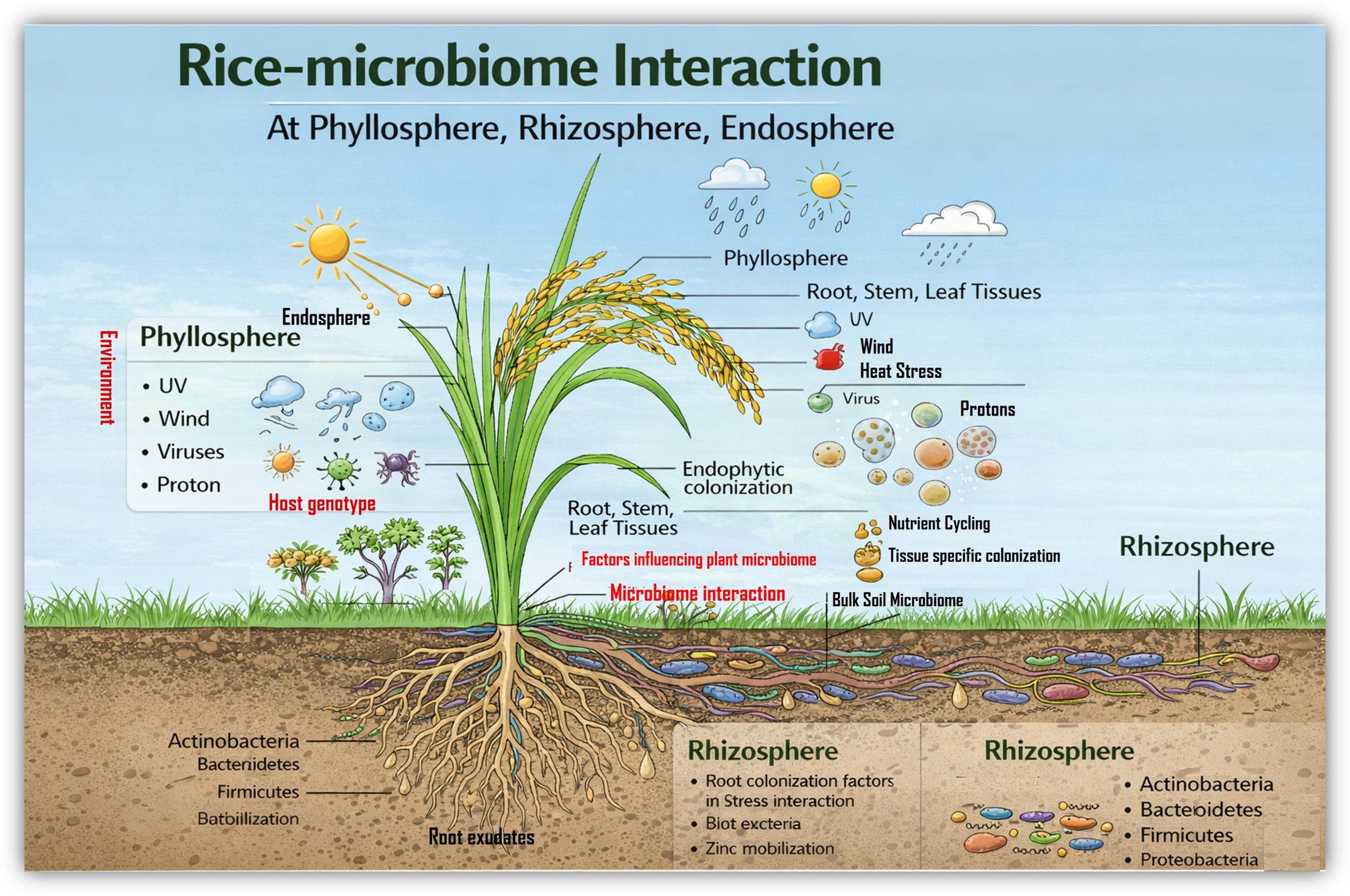 Fig. 1, Plant-Microbiome Interaction in Rice (Based on Prasanna et al., 2025)
Excessive reliance on synthetic fertilizers can disturb soil microbial balance and nutrient accessibility, possibly by weakening beneficial plant–microbe interactions. The microbiome has a significant contribution to the rice growth, development and resistance (Ma et al., 2025). Root-associated microbial communities strongly influence plant health and development. Plant root exudates are comprised of sugars, amino acids, and secondary metabolites (flavonoids, strigolactones, and salicylic acid). These chemicals serve as chemical signals, actively determining the structure and functions of microbial communities (Sandu et al., 2025).
Through the secretion of root exudates, plants impact the soil microbiome, thereby steering plant-soil interactions. Plant microbiomes, associated with roots and leaves and crucial for plant health (Wang et al., 2026). Rice-microbiome interactions involve symbiotic relationships between rice plants and microbial communities in key compartments: phyllosphere (above-ground leaf surfaces), rhizosphere (root-surrounding soil), and endosphere (internal plant tissues), which regulate nutrient cycling, plant growth, stress adaptation and disease resistance (Molefe et al., 2023).
Key Compartments of the Rice Microbiome
Rice microbiomes occupy distinct niches, each with unique microbial compositions influenced by plant exudates, soil type, genotype, and environment.
- Rhizosphere
- Phyllosphere
- Endosphere
1. Rhizosphere
Soil zone near roots is a biologically active hotspot driven by root exudates that mediates plant-soil-microbe communication and shapes microbial communities. Root exudates attract and modulate diverse microbial taxa, contribute to nutrient cycling, including phosphorus solubilization, nitrogen fixation, zinc mobilization, and stress mitigation, thereby enhancing plant resilience, pathogen suppression, and crop productivity.
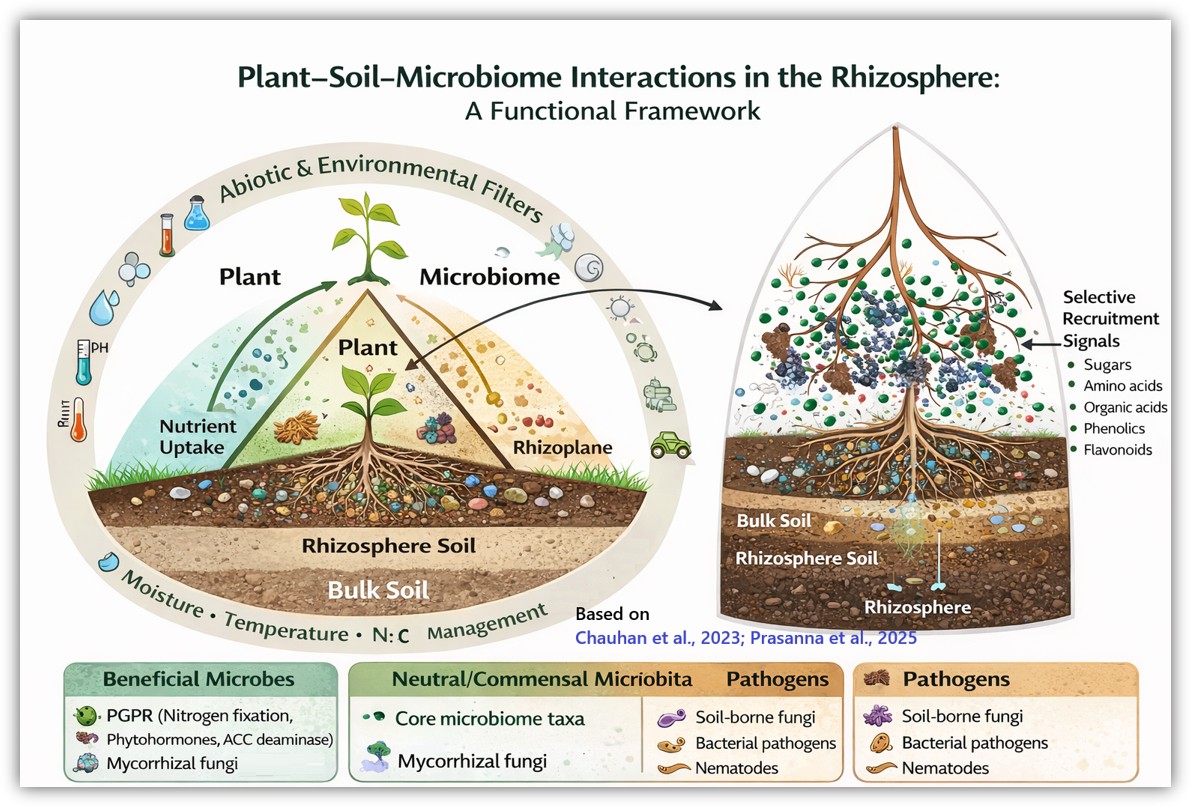
Fig. 2. Plant-Soil-Microbiome interaction in the Rhizosphere (Based on Chauhan et al., 2023; Prasanna et al., 2025)
2. Phyllosphere
Phyllosphere, comprising the aerial portions of plants, is a vibrant ecosystem teeming with diverse microorganisms crucial for plant health. It includes leaf surfaces, which serve as a microbiome reservoir. It is exposed to environmental factors, including temperature, UV, wind, and pathogens.
Phyllosphere hosts microbiota like Methylobacterium, Pantoea, and fungi (e.g., Aspergillus). They promote nutrient uptake, produce phytohormones, promote plant health through protective and metabolic functions and antagonize diseases (e.g., rice blast). The composition of microbiota of the phyllosphere is regulated by environmental conditions, crop management practices, leaf surface properties, stomatal density, leaf trichomes, etc.
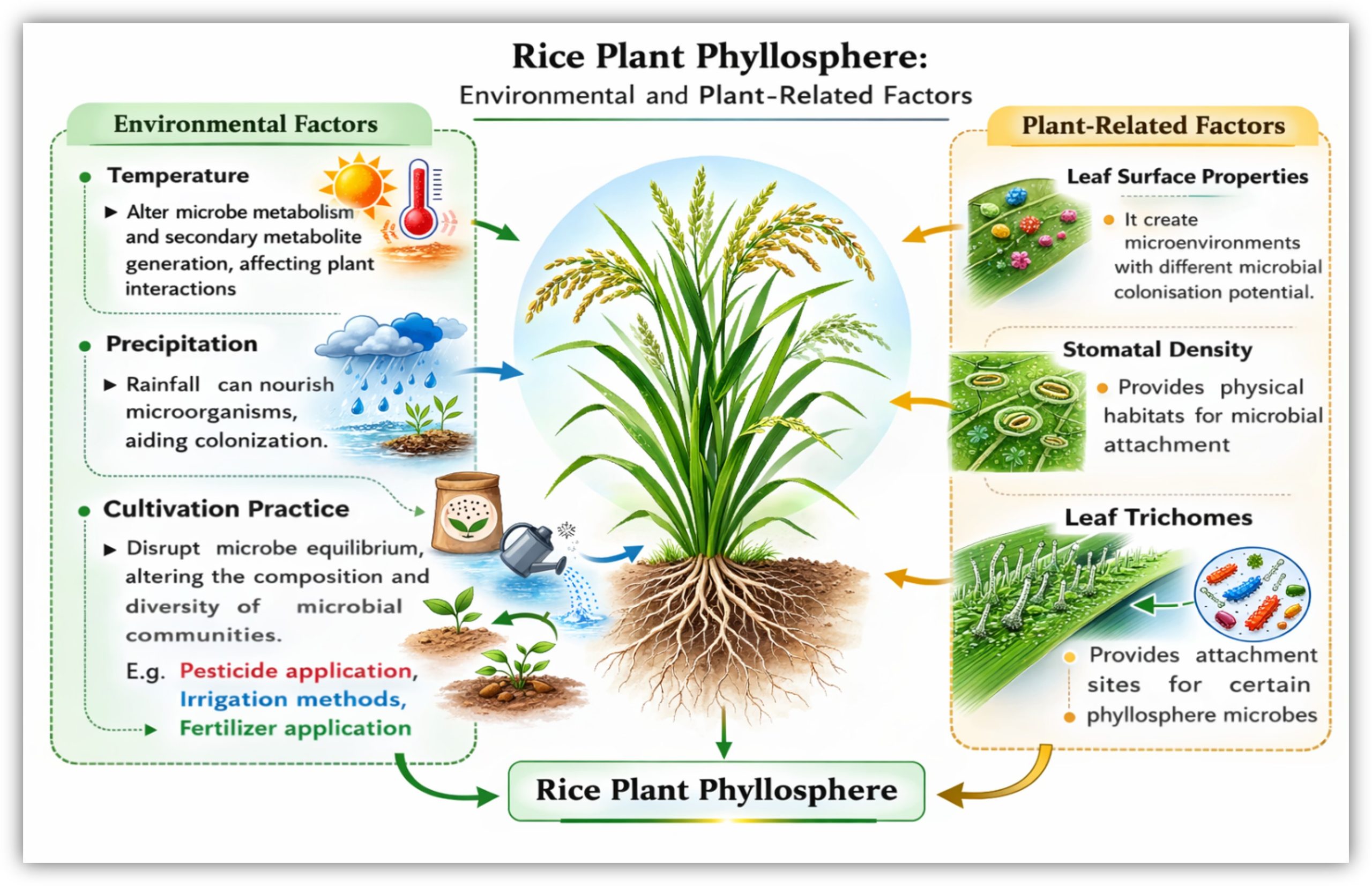 Fig.3. Rice plant phyllosphere
3. Endosphere
Endosphere includes internal tissues colonized by endophytes (Enterobacter, Trichoderma) that boost stress resilience through siderophores and enzyme production. Within the endosphere, tissue-specific colonization is influenced by host genotype and environmental conditions, supporting nutrient acquisition and resilience to biotic and abiotic stresses.
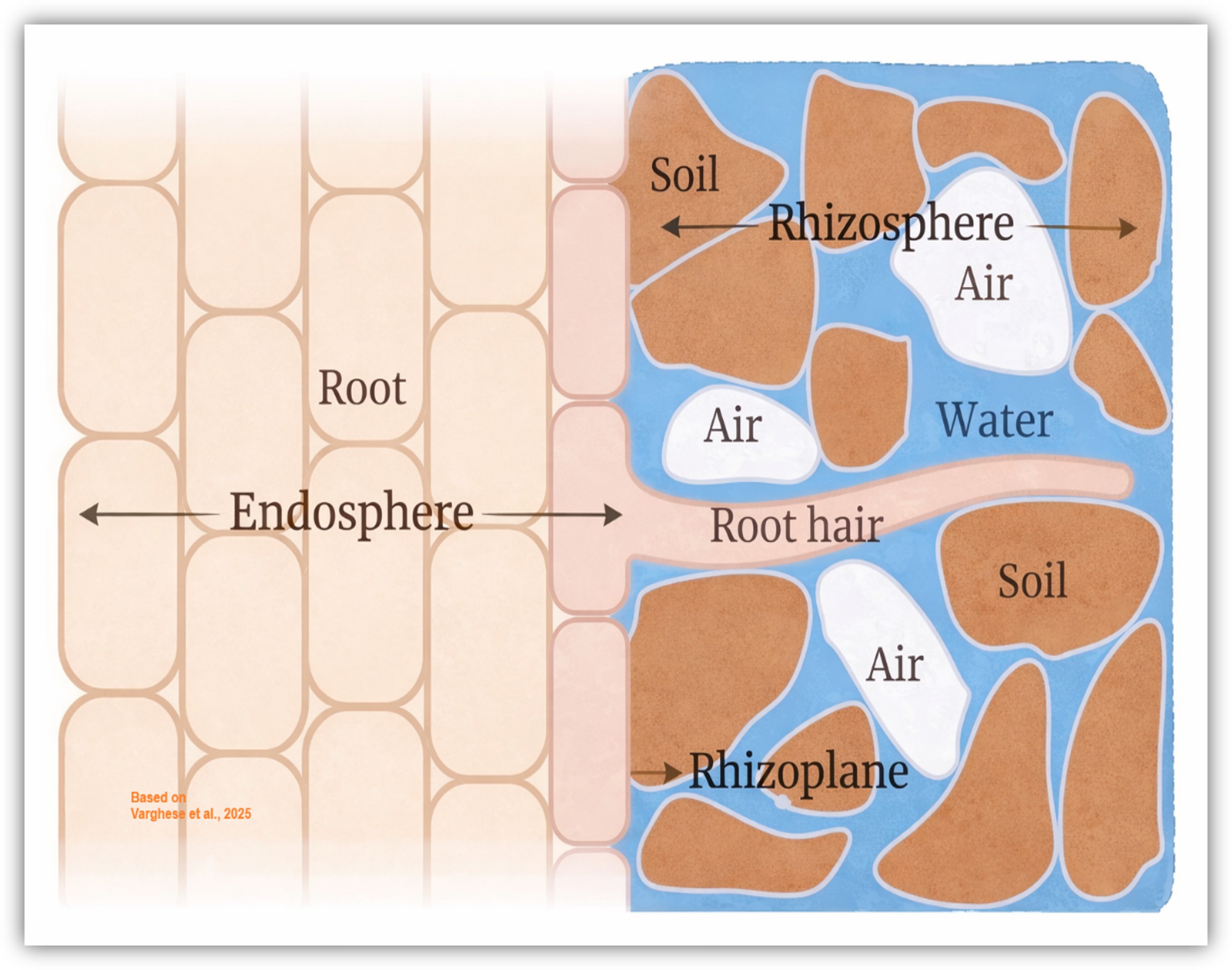 Fig.4. Endosphere-rhizosphere interaction (Based on Varghese et al., 2025)
Microbiome-Driven Rice Production
Microbes drive rice productivity by fixing nitrogen (e.g., Azospirillum), solubilizing nutrients, and inducing systemic resistance via quorum sensing and volatile compounds. These interactions reduce plant fertilizer requirements and enhance their resilience to drought, salinity, and plant pathogens like Magnaporthe oryzae. Rice genotype and cultural practices (e.g., alternate wetting-drying) shape microbiome assembly for optimized agriculture. A better perspective of plant roots and soil microbiome communication could lead to improved crop production, thus limiting the need for synthetic fertilizers (Zhao et al., 2024).
Beneficial microbes can boost rice yields by up to 50% through improved nutrient uptake and root development. Soil microbiota in high-yield systems enhance nitrogen metabolism, supporting ultrahigh yield without or with limited fertilizer supplementation. Inoculants restructure root microbiomes for eco-friendly biofertilization.
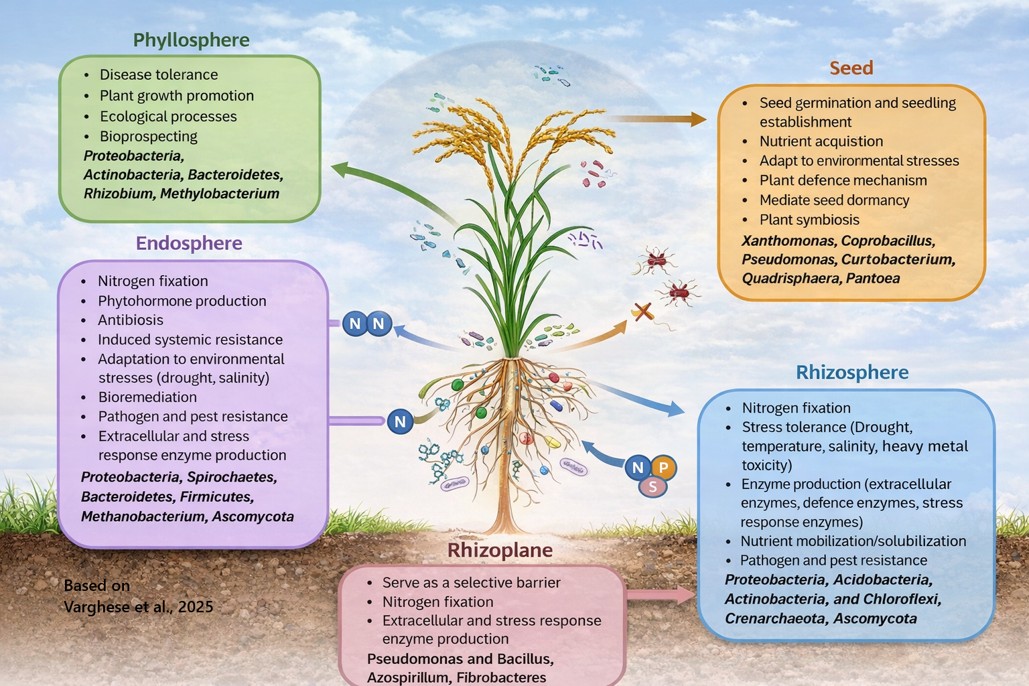 Fig.5. Drivers of Microbial Community Structure in the Rice Phyllosphere (Based on Varghese et al., 2025)
References
Chauhan, P., N. Sharma, A. Tapwal, A. Kumar, G.S. Verma, M. Meena, C.S. Seth, P. Swapnil. 2023. Soil Microbiome: Diversity, Benefits and Interactions with Plants. Sustainability 15: 14643. https://doi.org/10.3390/su151914643
Lareen, A., F. Burton, P. Schäfer. 2016. Plant root-microbe communication in shaping root microbiomes. Plant Molecular Biology 90: 575-587. https://doi.org/10.1007/s11103-015-0417-8
Ma, L., Y. Bai, X. Li, J. Li, F. Li, Y. Yue, Y. Li, J. Guo, C. Ye, X. Mei, F. Du, Y. Liu, M. Yang, S. Zhu and H. Huang. 2025. Compartment-specific core microbiomes and functions in rice. Plant and Soil 514: 2939-2958. https://doi.org/10.1007/s11104-025-07558-5
Molefe, R.R., A.E. Amoo, O.O. Babalola. 2023. Communication between plant roots and the soil microbiome; involvement in plant growth and development. Symbiosis 90: 231-239. https://doi.org/10.1007/s13199-023-00941-9
Ofori, A.D., W. Su, T. Zheng, O. Datsomor, J.K. Titriku, X. Xiang, A.G. Kandhro, M.I. Ahmed, E.W. Mawuli, R.T. Awuah, A. Zheng. 2024. Roles of Phyllosphere Microbes in Rice Health and Productivity. Plants 13: 3268. https://doi.org/10.3390/plants13233268
Prasanna, P., K. Subrahmaniyan, R. Arulmozhi, R. Parthasarathi, P. Rajarathinam, R. Puspha, M. Dhandapani. 2025. Role of microbiome associations in developing high yield and sustainable rice varieties. Plant Science Today 12: 10229. https://doi.org/10.14719/pst.10229
Sandhu, S.S., J. Alom, B.H. Ansari, and D. Singh. 2025. The secret dialogue between plant roots and the soil microbiome: A hidden force shaping plant growth and development. Physiological and Molecular Plant Pathology 140: 102908. https://doi.org/10.1016/j.pmpp.2025.102908
Sharma, A., R.K. Verma, 2018. Root–Microbe Interactions: Understanding and Exploitation of Microbiome, in: Giri, B., Prasad, R., Varma, A. (Eds.), Root Biology. Springer International Publishing, Cham, pp. 323-339. https://doi.org/10.1007/978-3-319-75910-4_13
Tan, L.T., D.J. Dailin, S.Z. Hanapi, R.A. Rahman, S. Mehnaz, I. Shahid, T. Ho, H.A. El Ensahsy, 2024. Role of Microbiome on Healthy Growth and Yield of Rice Plant, in: Sayyed, R.Z., Ilyas, N. (Eds.), Plant Holobiome Engineering for Climate-Smart Agriculture. Springer Nature Singapore, Singapore, pp. 141-161. https://doi.org/10.1007/978-981-99-9388-8_9
Varghese, E.M., J. George, A. Hareendran, A. Anilkumar, A.A.Y. Narayanan, J. James, V. Thykoottathil, A. Prasad, L. Perincherry, B. Cyriac, M.S. Jisha. 2025. Dynamics of rice microbiome: insights into functional diversity, environmental influences, response to stress, and applications. World Journal of Microbiology and Biotechnology 41: 296. https://doi.org/10.1007/s11274-025-04515-3
Wang, B., Z. Wang, Z. Chen, J. Zhang, X. Wang. 2026. Deciphering the profiles of grapevine microbiomes from rhizosphere-to-leaf compartments using multi-omic analysis. Frontiers in Plant Science. 16:1734057. https://doi.org/10.3389/fpls.2025.1734057
Zhao, J., X. Yu, C. Zhang, L. Hou, N. Wu, W. Zhang, Y. Wang, B. Yao, P. Delaplace, J. Tian. 2024. Harnessing microbial interactions with rice: Strategies for abiotic stress alleviation in the face of environmental challenges and climate change. Science of The Total Environment. 912: 168847. https://doi.org/10.1016/j.scitotenv.2023.168847
Similar Articles Published in JEAS
- Majeed, M.S. and J.S. Dar. 2023. Soil Health: Key to Achieving the Sustainable Development Goals (SDGs). JEAS-Blog. 2023(8): 1. Agropublishers, Multan, Pakistan.
- Zaib, M., U. Farooq, M. Adnan1, S. Sajjad, Z. Abbas, K. Haider, N. Khan, R. Abbas, A.S. Nasir, M.F. Muhay-Ul-Din. 2022. Remediation of Saline Soils by Application of Biochar: A Review. Journal of Environmental & Agricultural Sciences. 24(3&4): 29-36. [Abstract] [View Full-Text] [Citations].
- ext] [Citations].
Plant-Microbiome Interaction, Microbiome-Driven Rice Production, Phyllosphere, Sustainable Rice Production, Soil-born plant pathogens