
Why Soil Health Matters in Sustainable Food Production?
Soil health is the foundation of agricultural productivity, environmental sustainability, and long-term human well-being. Healthy soils key to plant growth, as they regulate water storage, recycle nutrients, reduce pollution, and sustain both aboveground and belowground biodiversity. Degraded soils lead to crop yields declining, higher cost of production, and increased environmental problems, including erosion, flooding, and climate stress.
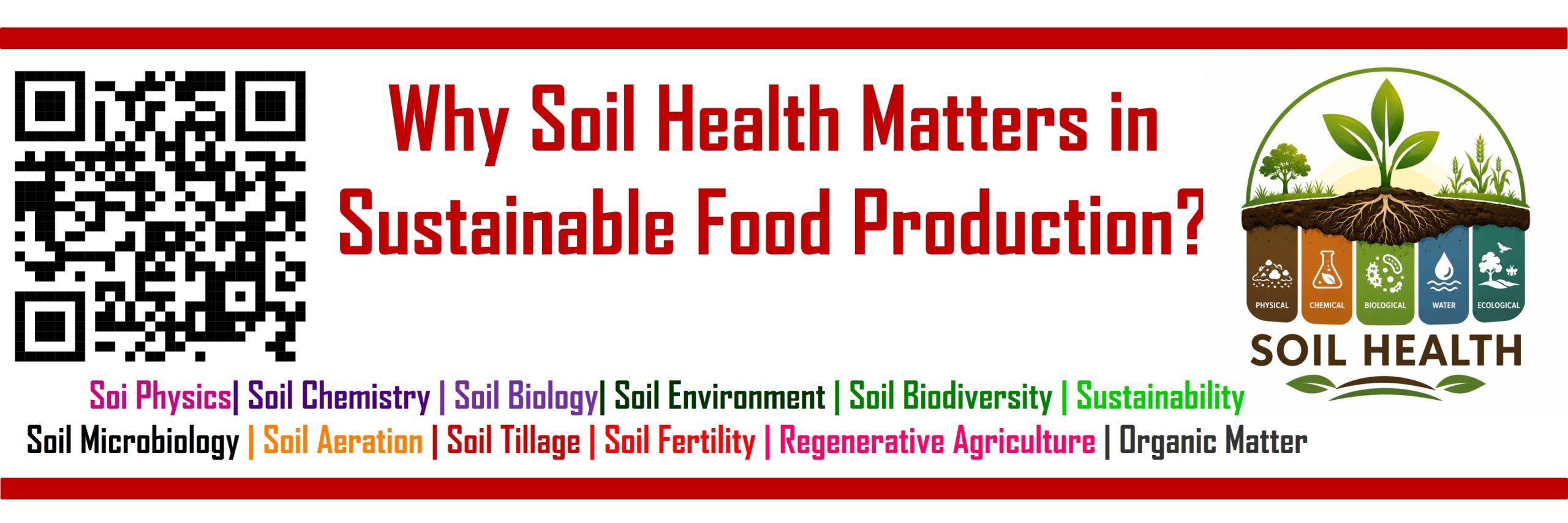
[Explore all MCQs] Why Soil Health Matters in Sustainable Food Production?
[Soil Health MCQs] [Soil Science MCQs] [Soil Physical Properties MCQs]
[Soil Chemical Properties MCQs [Crop and Environment MCQs] [Botany MCQs ]
[Plant Nutrition MCQs] [Plant Physiology MCQs][Environment Science MCQs]
What are the key components of Soil Health?
Why Soil Health Matters in Sustainable Food Production?
1. Food Security and Crop Productivity
Healthy soils are imperative to reliable and nutritious food production. Soils rich in organic matter supplement plants with essential nutrients, facilitate root growth, and support beneficial microbiota for efficient nutrient absorption by crop plants.
Agricultural lands with healthy soils often lead to higher and more stable crop yields, reduced dependence on chemical fertilizers, lower irrigation requirements, improved resilience during extreme weather events, including drought and heat stress. Adequate soil management can reduce cost of production and also lead to long-term farm profitability.
2. Increased Water Retention and Climate Resilience
One of the most valuable functions of healthy soil is its ability to absorb and retain water for prolonged use for plant growth. Soils with higher organic matter and better structure allow rainfall to infiltrate in the soil, instead of running over the soil surface.
Even a small percentage increase in soil organic matter can cause a major difference in soil properties, including water and nutrient holding capacities of soil. This improves drought resistance, reduces the chances of flooding, and helps crops survive during dry spells more effectively.
Healthy soils also contribute to mitigating climate change through improved carbon sequestration. Conservation practices like cover cropping, zero or minimum tillage, and organic matter incorporation help soils sequester carbon while reducing greenhouse gas emissions.
3. Environmental Protection and Biodiversity
Healthy soils act as natural environmental filters by trapping sediments, pollutant break down, and water quality before contamination of rivers, lakes, or underground aquifers.
Soils are habitats of biodiversity, including billions of microorganisms, fungi, insects, and earthworms. Their integrated work helps decompose organic matter and recycle nutrients. These organisms form the foundation of healthy ecosystems and support wildlife habitats across agricultural and natural landscapes. Compromised soil health often leads to biodiversity declines, disrupting ecosystem balance and reducing environmental resilience.
4. Human and Animal Health
Soil quality significantly affects the food quality. Fertile and nutrient-rich soils provide nutrients essential for plant growth and help produce crops with better nutritional value. Contrarily, degraded soils are often associated with essential nutrient deficiencies and poor-quality crop produce.
Healthy soils also reduce environmental health risks through limited dust, erosion, and contaminated runoff. This helps protect both livestock and human communities from exposure to harmful pollutants and pathogens.
Healthy soil is a living system that supports food production, clean water, biodiversity, and climate stability. Protecting and improving soil health is essential for sustainable agriculture and for the long-term health of ecosystems and communities worldwide.
why Soil health matters in sustainable food production, importance of soil health in sustainable agriculture, benefits of healthy soil for sustainable crop production, how healthy soils improve food security, role of soil health in climate-smart agriculture, how soil organic matter improves water retention, best soil management practices for sustainable agriculture, how to improve soil health naturally, importance of soil biodiversity in sustainable farming, relationship between soil health and crop productivity Why Soil Health Matters in Sustainable Food Production?
Importance of soil health in agriculture, Why soil health matters, Benefits of healthy soil, Soil health and sustainable agriculture, Role of soil in food production, Soil health and climate change, Improving soil fertility naturally, Soil biodiversity and ecosystem health, Sustainable soil management practices, Soil health for food security
#SoilHealth #SustainableAgriculture #HealthySoil #FoodSecurity #Sustainability #ClimateResilience #ClimateSmartAgriculture #RegenerativeAgriculture #Agriculture #EnvironmentalSustainability #SoilScience #SoilConservation #SoilBiodiversity #CarbonSequestration #EcosystemServices
#NutrientCycling #WaterConservation #HealthyEcosystems #SustainableFarming #OrganicMatter #HealthySoilsHealthyFuture #SaveOurSoil #FutureOfFarming #SmartFarming #GreenAgriculture #ProtectOurSoil #SustainableFoodSystems #NatureBasedSolutions #FarmSustainably #SoilForLife Why Soil Health Matters in Sustainable Food Production?