
Journal of Environmental and Agricultural Sciences (JEAS). Rehman et al., 2016. Volume 9: 87-95
Open Access – Research Article
Development and Quality Characteristics of Cereals-Legumes Blended Muffins
Tanzeel ur Rehman1,*, Mian Kamran Sharif 2, Ali Imran1,*, Muhammad Bilal Hussain 1, Muhammad Imran3, Muhammad Atif4, Usman Naeem1, Ahmed Bilal Waqar4
1Institute of Home and Food Sciences, Government College University, Faisalabad-Pakistan
2 National Institute of Food Science and Technology, University of Agriculture, Faisalabad-Pakistan
3Department of Diet and Nutritional Sciences, Imperial College of Business Studies, Lahore, Pakistan
4 Department of Medical Laboratory Sciences, Faculty of Health and Allied Sciences, Imperial College of Business Studies, Lahore, Pakistan
Abstract: Composite flours were formulated by the fortification of the wheat flour with the flours of maize, chickpea and soybean to prepare muffins. For this purpose, maize, chickpea and soybean were supplemented at 10, 20, 30, 40 and 50% levels with wheat flour, to formulate variant compositions. Afterwards, muffins were prepared from them and analyzed for crude protein, fiber, fat, ash, moisture and nitrogen free extract along with sensory attributes determination including crust color, volume, texture, aroma, taste, graininess, symmetry and evenness of bake so as to assess their acceptability by end-users. The crude protein, fiber, fat, ash, moisture and nitrogen free extract exhibiting significant behavior for assorted flour compositions. Selection of best composition comprised of 10% chickpea followed by 100% wheat, 10% corn, 20% chickpea and 10% soybean with no deleterious influence on quality and consumer acceptability. Due to their functional uses in cereal industry, this study will provide sensory scientists and food-service professionals with valuable insights.
Keywords: Amino acid, Peptide absorption, Small intestine
*Corresponding author: Nasir Ali Tauqir: tauqir041@hotmail.com
Cite this article as Rehman, T.U., M.K. Sharif, A. Imran, M.B. Hussain, M. Imran, M. Atif, U. Naeem and A.B. Waqar. 2016. Development and quality characteristics of cereals-legumes blended muffins. Journal of Environmental & Agricultural Sciences. 9: 87-95. [View Full-Text] [Citations]. ResearchGate
Title: Development and Quality Characteristics of Cereals-Legumes Blended Muffins Authors: Tanzeel ur Rehman, Mian Kamran Sharif, Ali Imran, Muhammad Bilal Hussain, Muhammad Imran, Muhammad Atif, Usman Naeem, Ahmed Bilal Waqar Pages: 87-95
Development and Quality Characteristics of Cereals-Legumes Blended Muffins, cereal-legume blended muffins, effect of legume flour substitution on muffin quality, protein enriched muffins, sensory evaluation
Similar Articles published in the Journal of Environmental and Agricultural Sciences
- Dev, P., U. Singh, L.N. Singh, Y.S. Shivay, M. Kumar and P.R. Raiger. 2023. Zinc biofortification of mungbean (Vigna radiata L.) as influenced by varieties and zinc fertilization. Journal of Environmental & Agricultural Sciences. 25 (1&2): 1-17 [Abstract] [View Full-Text] [Citations]
- Hassan, I., G. Abbas, J. Hussain, Z. Abbas, T. Mehmoos, M. Amer, M.A. Bhatti, S. Hussain. 2023. Optimization of phosphorus and potassium fertilization rates for improving mungbean production under arid agroclimatic conditions of Thal, Punjab, Pakistan. Journal of Environmental & Agricultural Sciences. 25 (1&2): 27-36. [Abstract] [View Full-Text] [Citations]
- Saeed, B., A. Nawab and S. Rani. 2020. Genotypic variation in micronutrient composition of Potato (Solanum tuberosum). Journal of Environmental and Agricultural Sciences. 22(1):64-70. [Abstract] [View Full-Text] [Citations]
- Ali, M.F., A. Ammar, S. Bilal, U. Ali, N. Huma and M. Adnan. 2021. Mitigating zinc deficiency in plants and soils through agronomic techniques: A review. Journal of Environmental & Agricultural Sciences. 23(1&2): 1-10. [View Full-Text]
Copyright © Rehman, 2016. This is an open-access article distributed under the terms of the Creative Commons Attribution License, which permits unrestricted use, distribution, and reproduction in any medium provided the original author and source are appropriately cited and credited.
Development and Quality Characteristics of Cereals-Legumes Blended Muffins, cereal-legume blended muffins, effect of legume flour substitution on muffin quality, protein enriched muffins, sensory evaluation
Introduction
Nutritive deficits are leading health glitches prevailing in tropical and subtropical constituencies, globally. There is dire need to focus on varied methodologies including food fortification, diet modification and diversification to regulate this jeopardy. Malnutrition refers to an ailment that originates when the human body is not supplied with the precise volume of vitamins, minerals, and supplementary nutrients which are prerequisite to maintain healthy tissues and steady organ function. It grasps both under-nutrition and over-nutrition. It’s a key concern in developing states where fast growing population has resulted in inadequate supply of nutrients. In 21st century, malnutrition remains the single most important factor impairing health and productivity of large human populaces. It is mostly communal in low-income groups, where families are unable to purchase or produce food in sufficient amount to meet their body requirements (David and Lobo, 1995). However, in numerous developing countries, under and over-nutrition exhibit simultaneously, reflecting the consequences of a poor diet. The severity of illness is worse among malnourished individuals than the healthy ones, which is true depiction of the fact that malnutrition makes masses more susceptible to infections and illness.
Protein malnutrition is no more concession resulting from inadequate protein intake and manifesting in either marasmus or kwashiorkor. These explicit disorders are more prevalent in children than in adults. Protein malnutrition in Pakistan is most widespread in Baluchistan province, where only 27% of the children are normally nourished. Similarly, in KPK, Sindh and Punjab 31%, 36% and 49% children are normally nourished, respectively (Awan, 2007). World Health Organization (WHO) in its global burden of protein-energy malnutrition draft reported that 7.8% of all childhood deaths result from malnutrition, two thirds of which results in low birth weight babies, and rest are contributed directly to malnutrition (WHO, 2000). The greater interest has emerged, in developing high-protein foods to improve human diets, particularly among the low income and vulnerable sections of our population.
Fig.1 The distribution of malnutrition throughout the world
According to WHO, an estimated 206.2 million children (38%) under 5 years old world wide are stunted, 167.3 million children (31%) are underweight and 48.8 million children (9%) are wasted. The largest numbers of affected children are found in Asia, where 41% of all under 5 years old are stunted, 35% are underweight, and 10.3% are wasted. UNICEF estimates that about 10 per cent of children in the world are wasted today. Severe acute malnutrition is estimated at around 3.4 per cent in the low and middle income countries and one per cent in the rest. This translates to about 19 million severely malnourished children at one time (WHO, 2000). Stunting is much more common than wasting, affecting an estimated 32 per cent of children worldwide. The combination of wasting and stunting mean an estimated 146 million children are underweight worldwide. Factors affecting malnutrition are many and varied (Tharakan and Suchindran, 1999).
The ubiquitous consumption of cereals all over the world gives them a momentous position in international nutrition. Besides the high starch content as energy source, cereals offer dietary fiber, nutritious protein and lipids rich in essential fatty acids (Bean et al., 1989). Legumes are recognized as important sources of protein and consider as pitiable man’s meat. Legume proteins are rich in lysine and lacking sulphur containing amino acids, but cereal proteins are deficient in lysine, but have sufficient amounts of sulphur amino acids (Eggum and Beame, 1983). Therefore, the combination of grain with legume would provide superior overall essential amino acid balance, helping to conflict the world protein malnutrition problem (Livingstone, 1993).
Studies on composite flour technology have been carried out in copious fragments worldwide, to explore their importance on human health. This technology illustrates a fascinating option to avert the process of malnutrition. Composite flours are prepared by blending cereals with legumes resulting in an improvement of nutritional and functional properties. This concept is technically feasible and economically desirable in most cases. Composite flour blend having wheat flour as main ingredient, supplemented with chickpea (Gomez et al., 2007: Shahzadi et al., 2005), maize (Akubor and Onimawo, 2003: Obatolu and Coleb, 2000), soybean (Bordi et al., 2010: Edema et al., 2005: Khan et al., 2005: Olaoye et al. ,2006: , Senthil et al., 2002: Sanful et al., 2010), cotton (Ahmed and Araujo, 1978), cowpea (Hallen, 2004) and moth bean (Awan et al., 1995) for the preparation of layer and sponge cakes, chapattis, biscuits, bread, cookies, sweet and savory snacks to attain average protein concentrations, sensory acceptability and superior nutritional quality.
Sensory evaluation is a scientific restraint used to induce, extent, explore and interpret those responses to products that are apparent by the senses of sight, smell, touch, taste and hearing. It lessens uncertainty and menaces in decision making. It also ensures a cost-efficient distribution of new foodstuffs with high consumer acceptability. The role of sensory evaluation becomes more important in determining consumer behavior toward the acceptability of the product. It is usually performed after product development by accessing the reaction of panelists or judges towards the end product through rating on liking and disliking. Baked products offer a tremendous prospect to incorporate food-grade fractions from grains, legumes, or other food sources to make a healthy, nutritious and highly acceptable edible artifact. Among several baked goods, muffin (a type of sweet quick bread/cake) embraces a loftier spot, characterized by its porous structure and high volume.
A desirable muffin product has symmetrical shape, a rounded top that is golden brown in color, inside creamy white or slightly yellow and free from streaks, cell are uniform and moderate in size, sweet flavor, pleasant aroma, moist, and tender (Mcguire et al. 2001). Standard muffin formula is composed of sugar, fat or oil, flour, eggs, milk and baking powder (Baixaulia et al., 2007). They come in wide range of size, shape and flavor. Their consumption covers about more than 46% of all other savory foods, globally (Hui et al., 2006).
Therefore, the present study has been planned to achieve the following objectives:
- The prospects of blending maize, chickpea and soybean flours with wheat flours
- To prepare protein enriched muffins from blended flours for school going children
- To find out product acceptability through sensoric attributes
- To overcome protein energy malnutrition.
______________
Development and Quality Characteristics of Cereals-Legumes Blended Muffins, cereal-legume blended muffins, effect of legume flour substitution on muffin quality, protein enriched muffins, sensory evaluation
2 Materials and Methods
2.1 Procurement of raw materials
Wheat (Triticum aestivum L.), maize/corn (Zea mays L.) soybean (Glycine max L.) and chickpea (Cicer arietinum L.) were purchased from the local market (Faisalabad, Pakistan) to make cereal-legumes blended flours.
2.2 Preparation of raw materials
The raw materials were cleaned manually to remove dirt, dust, damage seeds, seeds of other crops and foreign matter. The particle size of wheat, maize, soybean and chickpea was reduced to fine flour through Quadrumat Senior Experimental Mill.
Table 1. Treatments used to prepare composite flours
2.3 Preparation of flour blends
Maize, chickpea and soybean flours were blended manually with wheat flour in different combinations to prepare composite flours. Each treatment of composite flour was thoroughly mixed in order to achieve uniform mixing of legume flours with wheat flour.
2.4 Preparation of composite flour muffins
Muffins were prepared as described by (Shearer and Davis, 2005) with some modifications. Sugar 180g and oil 180mL were mixed in mixing pan till the grain of sugar becomes completely ground. Then 3 eggs were beaten gently till the foaming develops. Now added 200g flour with 15g baking powder and mixed properly. At the end 50mL milk was added till viscous batter formed. Grease the pan sides than butter paper was placed in muffin pan than pour the batter in it and fill up to 2/3 portion of pan. Bake it for 20 to 25 minutes at 180 0C in an oven. After baking, muffins were removed from oven and cooled at room temperature.
2.5 Nutritional analysis of muffins
Fiber using fiber tech (Model: Labconco Corporation, Kansas, USA), Protein using Kjeldahl’s apparatus (Model: Technik GmbH D-40599, Behr Labor, Germany), moisture using oven, fat using Soxhlet apparatus (Model: HT2 1045 Extraction unit, Hoganas, Sweden), ash using muffle furnace (Model: MF-1/02, PCSIR, Pakistan) were determined by AACC Method No. 32-10, 46-10, 44-01, 30-10, 08-01, respectively (AACC, 2000). The nitrogen free extract (NFE) was calculated according to the below expression:
NFE % = 100 – (% moisture + % crude fiber + % crude protein + % crude fat + % Ash).
2.6 Sensory evaluation
The sensory evaluation of muffins for various attributes like color of crust, aroma, taste, volume, texture, symmetry, graininess and evenness of bake were evaluated as described by (Meilgaard et al., 2007). Sensory evaluation was carried out by trained panel using 9-Point Hedonic score system with following individual score: Dislike extremely-1, Dislike very much-2, Dislike moderately-3, Dislike slightly-4, Neither like nor dislike-5, Like slightly-6, Like moderately-7, Like very much-8 and Like extremely-9. All evaluation was conducted at room temperature in National Institute of food Science and Technology (NIFSAT) sensory evaluation lab University of Agriculture, Faisalabad-Pakistan.
Table 2. Mean squares for sensoric attributes of composite flour muffins
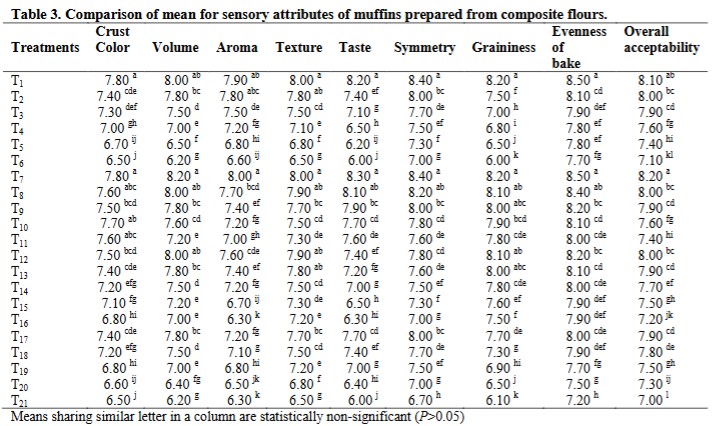
Table 3. Comparison of mean for sensory attributes of muffins prepared from composite flours
Twenty one healthy volunteers (8 females and 13 males) ranging in age from 24 to 50 years took part in this study. All participants (Students, Teachers, and Employees) confirmed that they had no clinical history of major disease. All participants reported no impairment in their senses of smell and taste and color-blindness. Panelists were provided with distilled water to rinse the tongue before testing next sample. Muffins were presented in random order and panelists were asked to rate their acceptance by giving score for all parameters.
2.7 Statistical analysis
The data obtained for each parameter was subjected to statistical analysis (one way ANOVA) to determine the level of significance (Analysis of variance technique) in completely randomized design as described by (Steel et al., 1997). Means were further compared through Duncan’s multiple range test to determined the significance differences.
3. Results and discussion
3.1 Sensory attributes
Means for the effect of different flour compositions on sensory attributes of muffins showed significant differences due to composite flour.
3.1.1 Color of crust
Foods that are aesthetically appealing, more likely to be consumed and contribute in a person’s nutrition. Color is a vital constituent of food and probably it is the first characteristics perceived by the consumer senses. It is crucial as a means for identification and acceptance of food. Generally, consumers except foods with certain color and refuse any deviation from their expectations. In case of muffin, the outside color should be an even golden brown, and be tender, with a pebbly or slightly rough and shiny surface while inside should be creamy white or slightly yellow and free from streaks. Under baked muffins showed too light crust color. Sensory score for crust of color showed that T7 (90% wheat + 10% chickpea flour) liked more by the judges followed by T1 (100% wheat flour), T10 (60% wheat + 40% chickpea flour), T8 (80% wheat + 20% chickpea flour) and T11 (50% wheat + 50% chickpea flour) while T6 (50% wheat + 50% corn flour) got the lowest score followed by T21 (50% wheat +16.66% corn + 16.66% chickpea + 16.66% soybean flour). As the concentration of flour blends increased, there were slightly increased in color darkness. This might be due to more protein content of these flour compositions leading to more browning due to Millard reaction and caremelization. Color of baked products should be pleasing golden brown, not pale or burnt (Cross et al., 2006). During baking, amount of water on dough surface quickly decreased, providing favorable condition for browning reaction resulting in darker brown color (Esteller and Lannes, 2008). Composition of flours, choice of pan, temperature, time for baking, longer mixing time and addition of additives also affect the color of the product (Huma, 2004).
3.1.2 Volume
Compact muffins with small cells or large muffins with peaked top and tunnels are undesirable in all types of muffins. Muffins having volume with uniform cells size, cell wall of medium thickness, well-rounded top, free from peaks, with no cracks and be large in proportion to weight are considered more acceptable. Protein in wheat flour holds the other ingredients together to provide expanded structure to the final product. Solubilization and activation of leavening agent generate carbon dioxide that expands to increase the volume of the muffins. Inadequate mixing or longer mixing as well as too high or too low temperature also results in low volume. Sensory score for the volume of muffins showed that highest volume score was gained by T7 (90% wheat + 10% chickpea flour) followed by T1 (100% wheat flour), T8 (80% wheat + 20% chickpea flour) and T12 (90% wheat + 10% soybean flour). T6 (50% wheat + 50% corn flour and T21 (50% wheat +16.6% corn + 16.6% chickpea + 16.6% soybean flour) attained the lowest scores from the judges. As the concentration of legumes flours and corn flour increased in blends, there was gradual decreased in the volume of muffins might be due to lack of gluten proteins in legumes and corn flour. Due to hydration of protein in wheat flour, the gluten network develops that trap the gases resulting in increased volume. Product prepared with edible oil rather than fat play key role in adequate aeration, resulting in increased volume of the final product. When wheat flours were gradually replaced with legumes flour, there was less development of gluten network, ultimately less volume of the muffins. Moreover, muffins tend to be crumbly and compact (Hui et al., 2006). Some modifications were made in recipe to produce muffins so there was with no excessive crumbling in the final product.
3.1.3 Texture
The attribute of a substance resulting from a combination of physical properties and perceived by the senses of touch (including kinaesthesis and mouthfeel), sight and hearing (Brennan, 1989). Food texture is extremely important from consumer’s point of view. It is used by consumer not only an indicator of food safety but also an indicator of food quality. It depends on ash content of blended flours, higher the ash content; harder will be the texture of the final product (Huma, 2004). It also depends on physical condition of the crumb and is greatly influence by grain. The texture should be moist, tender and light with even round-holed grains. Extent of mixing time also affects the texture. Sensory score for the texture of muffins showed that highest scores (8.0) was got by T7 (90% wheat + 10% chickpea flour) followed by T1, T2, T8, T12 and T13. The overall results revealed that composition having corn flours got the lowest scores. Texture of the muffins also depends on particle size of the flour. Particle size of wheat and legumes flours was finer than that of corn. The ash content of the flours also has negative impact on the texture of the final product. The flour protein content improves not only emulsifying capacity but also emulsifying stability in product with improve texture. A desirable muffin should be easily broken and slightly crumbly. Extreme crumbling and toughness with lack of crumbling are undesirable characteristics (Hui et al., 2006).
3.1.4 Aroma
Aroma is the sensation recognized by sense of smell. It may be sweet, musty, wheaty or pulsy. The ideal aroma should be pleasant, fresh, sweet and natural sharp. Bitter or foreign aroma is undesirable. Sensory score for the aroma of muffins showed that highest aroma scores gained by T7 (90% wheat + 10% chickpea flour) followed by T1 (100% wheat flour) and T2 (90% wheat + 10% corn flour) while the lowest scores was assigned to T21 (50% wheat +16.66% corn + 16.66% chickpea + 16.66% soybean flour). Flour at 10% level did not affect aroma and mouth feel. The 20% flour level appeared to have negative effect on sensory quality this can be overcome by optimizing formulation (Cake like and bread like muffin) and/or changing in processing conditions (Stauffer, 2002; Hui et al., 2006).
3.1.5 Taste
Taste is a sensation perceived by tongue and influenced by texture, aroma and composition of foods. Sensory score for the taste of muffins showed that highest scores got by T7 (10% chickpea) followed by T1 (100% wheat) and T8 (20% chickpea) while the lowest score got by soybean and corn muffins above 20% flour level. It is obvious from result that muffins prepared with chickpea are better in taste concluded by the panelists followed by soybean and corn flour. The acceptable taste of muffin should be pleasant and sweet. Flat, foreign, salty, soda or sour or bitter taste is undesirable. Unique protein in wheat gives most bakery products unique taste than any other ingredients (Matz, 1992).
3.1.6 Symmetry
A typical muffin profile has a natural downward slope on all sides with center peak. Desirable muffin product has uniform symmetrical shape (Willyard, 2000). Sensory score for the symmetry of muffins summarized that highest scores obtained by T1 (100% wheat flour) followed by T7 (90% wheat flour + 10% chickpea flour) and T8 (80% wheat flour + 20% chickpea flour). The results explained that the better symmetry was found in wheat followed by chickpea, corn and soybean. This can be attributed to minimal gluten development when these flours are used (Stauffer, 2002).
3.1.7. Graininess
The grain of the muffin becomes finer with longer mixing, the cell walls thinner, the tunnels more numerous, and the muffin is more compact. Sensory score for the graininess of muffins showed that T1 (100% wheat flour) attained highest scores followed by T7 (90% wheat + 10% chickpea flour), T8 (80% wheat + 20% chickpea flour), T12 (90% wheat flour + 10% soybean flour), T9 (70% wheat + 30% chickpea flour) and T13 (80% wheat flour + 20% soybean flour). Lowest scores noted in T6 and T21 that is (50% wheat + 50% corn flour) and (50% wheat +16.66% corn + 16.66% chickpea + 16.66% soybean flour) respectively. Similar findings with (Gomez et al., 2007:Akubor and Onimawo, 2003). This might be due to nature of flours either fine or coarse (Rupasinghe et al., 2008). Fine flour makes product with no holes, tunnels than coarse due to small particle size.
3.1.8. Evenness of bake
A good flow of heat onto the bottom of pan is necessary to produce good quality product. Sensory score for the evenness of bake in muffins showed that T1 (100% wheat flour) obtained highest scores followed by T7 (90% wheat + 10% chickpea flour), T8 (80% wheat + 20% chickpea flour), T9 (70% wheat + 30% chickpea flour) and T12 (90% wheat + 10% soybean flour) while lowest scores observed in T21 (50% wheat + 16.66% maize + 16.66% chickpea + 16.66% soybean flour). It is cleared from the result that evenness of bake found to be good in chickpea flours blends followed by soybean and corn while flour compositions having wheat, corn, chickpea and soybean (T17 to T21) showed evenness of bake up to 20% levels. It depends upon the quality of oven, quality of flour related to amount of water and dough kneader. Good flow of heat onto bottom of the pan is necessary to produced good quality product (Berson, 1998).
3.1.9. Overall acceptability
In existing study, sensory score for overall acceptability in Table 3 found that muffins prepared from T7 acquired the highest acceptability score whereas T21 got the lowest acceptability by the panelists. Judges liked muffins prepared from 100% wheat flour, with chickpea flour muffin up to 20% level, soybean flour and corn flour muffin up to 10% level. In all flour blends, containing all flour (T17-T21) up to 10% level was accepted by judges. In the present research, different composite flour combinations affect the overall muffins quality due to variation in chemical, rheological and sensory attributes. Besides, the addition level of cereals and legumes (Butt, 1997) observed that there were many factors such as preparation of dough, protein content and quality, water absorption and damage starch which influence the quality of the end product.
Table 4. Mean squares for proximate analysis of composite flour muffins
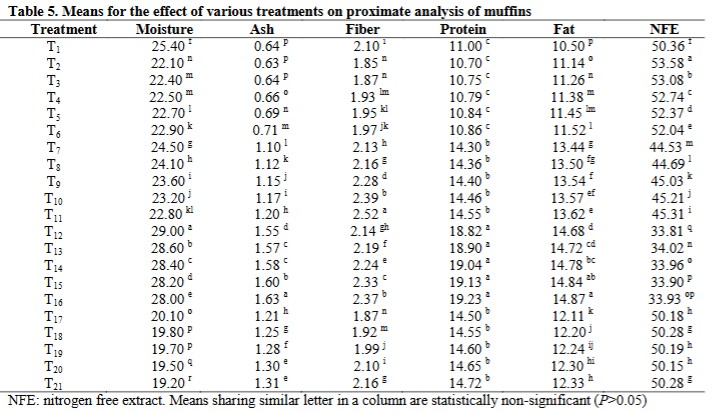
Table 5. Means for the effect of various treatments on proximate analysis of muffins
3.2. Nutritional Analysis
The analysis of food component plays an important role in the final nutritional value, shelf life and the overall acceptance by the end user. The quality of food is based on the natural composition and the balance between the nutrients. The results of the chemical analysis of different compositions of muffins differed significantly. The results for moisture, crude fiber, crude protein, crude fat, ash and NFE in different composite flour muffins differed significantly due to variations in chemical composition and nutritional value. Means for the effect of chemical analysis on different compositions of muffins affect significantly.
Increasing trend in moisture was observed in wheat-corn flour blended muffins at 10% to 50% level that ranged from 22.1% to 22.9% whereas all flour blended muffins showed decreasing trend that ranged from 20.1% to 19.2%. It is cleared from the results as the concentration of legumes flour increase up to 50% level in muffins there were decrease in moisture content but in corn flour blended muffins it increased. Maximum ash content was observed in T16 while the minimum found in T2. These treatments were found to be non-significant with respect to each other. Increasing trend was noted in treatments as the concentration of flour increased, ash content also increased. Highest value of fiber was got by T11 (2.52٪) while the lowest was found in T2 (1.85). These treatments were found to be non-significant with respect to each other. It is obvious from the result that highest fiber was found in chickpea muffins followed by soybean and all flour blends muffins while the lowest fiber found in corn muffins. Wheat muffins contained 2.10% fiber. Protein enriched muffins contain highest value of protein in T16 followed by T15, T14, T13 and T12. These treatments were found to be non-significant with respect to each other. In all flour blended muffins protein value ranged from 14.50% to 14.72%. In chickpea muffins, protein content varied from 14.30% to 14.55% whereas lowest protein value was found in corn muffins ranged from 10.70% to 10.86%. It is clear from the result that legumes contain higher protein then cereals.
As the concentration of flour increase, fat content was found highest in soybean muffins followed by chickpea muffins. In soybean muffins fat content ranged from 14.68% to14.87% whereas in chickpea muffins it ranged from 13.44% to 13.62%. In all flour blended muffin it ranged from 12.11% to 12.33% whereas in corn muffin fat content varied from 11.14% to 11.52%. In wheat flour muffins fat content was 10.50%. The highest NFE was attained by T2 followed by T3 and T4 while the lowest was noted in T12 followed by T15. Wheat flour muffins contained 50.36% NFE. Highest NFE was found in corn muffins followed by all flour blended, chickpea and soybean muffins.
Development and Quality Characteristics of Cereals-Legumes Blended Muffins, cereal-legume blended muffins, effect of legume flour substitution on muffin quality, protein enriched muffins, sensory evaluation
4. Conclusion
The trials were piloted not only to accomplish appropriate nutrient composition, specific functional physiognomies of composite flour muffins, but also to exploit native raw materials in a cost-effective manner. Cereal-legume based products being highly acceptable in masses of all ages around the globe, as well as its practical uses in food industry for making cereal-based products so our first priority is to be utilized in this particular research venture to overcome protein malnutrition, especially in school going children. From current research, it is concluded that blending of legumes and cereals flour improves sensoric and protein characteristics of muffins. Different composite flour combinations affect the overall muffins quality due to variation in chemical and sensory attributes. The results regarding sensory evaluation indicated that muffins prepared from composite flour containing chickpea flour up to 20%, corn, soybean and all flour blends having wheat, corn, chickpea and soybean up to 10% level could not make any significant impact on sensory attributes. It was further observed that decreased in score were due to percent replacement of legumes flour. Chemical analysis showed that as the concentration of legumes flour increased with cereals flour ultimately protein contents increased.
Acknowledgements: This research was supported by National Institute of Food Science and Technology (NIFSAT) University of Agriculture, Faisalabad-Pakistan.
Competing Interests: Authors declare no potential conflict of interest.
________
Development and Quality Characteristics of Cereals-Legumes Blended Muffins, cereal-legume blended muffins, effect of legume flour substitution on muffin quality, protein enriched muffins, sensory evaluation
References
AACC. 2000. Approved Methods of American Association of Cereal Chemists. 10th ed. Inc. St. Paul. Minnesota: American Association of Cereal Chemist.
Ahmed, E.M., and P.E. Araujo. 1978. Sensory and nutritional quality of fortified corn muffins. Peanut Sci. 5: 44-48.
Akubor, P.I. and A.I. Onimawo. 2003. Functional properties and performance of soybean and maize flour blends in cookies. Plant Foods Human Nutri. 58: 1-12
Awan, J.A. 2007. Elements of food and nutrition. Uni-tech Communication, Faisalabad, p. 60.
Awan, J.A. A. Rehman, S. Rehman, and A.S. Hashmi. 1995. Evaluation of biscuits prepared from composite flour containing moth bean flour. Pakistan J. Agric. Sci. 32 (1):211-217.
Baixaulia, R. T. Sanz, A. Salvador and S.M. Fiszman. 2007. Influence of the dosing process on the rheological and microstructural properties of bakery product. Food Hydrocolloids. 21: 230-236.
Bean, S.R., J.A. Bietz and G.L. Lookhart. 1998. High-performance capillary electrophoresis of cereal proteins. J. Chromat.. 814(1-2): 25-41.
Berson, R.C. 1988. Muffin. Technical bulletin. Am. Instit. of baking. 10(6):1-4.
Brennan, J.G. 1989. Texture Perception and Measurement. In: Sensory Analysis of Foods. Piggott, J.R., ed., Elsevier, London, p. 69-101.
Bordi, P. C.U. Lambert, J. Smith, R. Hollender and M.E. Borja 2001. Acceptability of soy protein in oatmeal muffins. J. Food Service. 13(2): 101-110.
Butt, M.S. 1997. Physiochemical and protein composition of spring’s wheats in relation to end use quality. Ph.D. Thesis Dept. Food Technol. Uni. Agric. Fsd, Pakistan
Cross, N. Y.H. Hui, H. Corke and I. Deleyn. 2006. Bakery products: Science and Technology, 1st ed., Blackwell publishing professional. State Avenue Ames, Lowa, USA, p. 60-527.
David, S. and M.L. Lobo. 1995. Childhood diarrhea and malnutrition in Pakistan, Part I: Incidence and prevalence. J. Pediatr. Nurs. 10 (2):131-137
Edema, M.O., L.O. Sanni and A.I. Sanni. 2005. Evaluation of maize-soybean flour blends for sour maize bread production in Nigeria. African J. Biotechnol. 4(9): 911-918.
Eggum, B.O. and R.M. Beame. 1983. The nutritive value of seed proteins. In W. Gottschalk and P. H. Muller (Eds.). Seed Protein Biochemistry, Genetics and Nutritive Value. Springer Netherlands, Dordrecht. p. 499-531.
Esteller, M.S. and S.C.S. Lannes. 2008. Production and characterization of sponge-dough bread using scalded rye. J. Texture Stud. 39(1): 56-67.
Gomez, M., B. Oliete, C.M. Rosell, V. Pando and E. Fernandez. 2008. Studies on cake quality made of wheat-chickpea flour blends. LWT-Food Sci. Technol. 41(9): 1701-1709.
Hallen, E. S. Ibanoglu and P. Ainsworth. 2004. Effect of fermented/germinated cowpea flour addition on the rheological and baking properties of wheat flour. J. Food Engin. 63(2): 177-184.
Hui, Y.H. H. Corke, I. Deleyn, N. Cross. 2006. Bakery products: Science and Technology. 1st ed., Blackwell publishing professional. State Avenue, Ames Lowa, USA, p. 60-527.
Huma, N. 2004. Fortification of whole wheat flour with iron for the production of unleavened flat bread (chapattis). Ph.D Thesis. National Institute of Food Science and Technology, University of Agriculture, Faisalabad- Pakistan.
Khan, M.I. F.M. Anjum andS. Akthar. Nutritional improvement of chapatti using soy hulls. J. Res. (Sci). 16(2): 57-63.
Krishnaiya, R., C. Kasar and S. Gupta. 2016. Influence of water chestnut (Trapa natans) on chemical, rheological, sensory and nutritional characteristics of muffins. J. Food Meas. Charact. 10(2): 210-219.
Livingstone, A.S. J.J. Feng and N.G. Malleshi. 1993. Development and nutritional quality evaluation of weaning foods based on malted, popped and dried wheat and chickpea. Int. J. Food Sci. Technol. 28: 35-43.
Matz, S.A. 1992. Bakery Technology and Engineering. 3rd edition. Van Nostrand Reinhold/AVI. New York.
Mcguire, B. E., S. Cnambers, S. Godwin and S. Brenner. 2001. Estimating portion size of muffins. Res. Prof. Brief. 101(40): 470-472.
Meilgaard, M., G.V. Civille and B.T. Carr. 2007. Sensory Evaluation Techniques, 4th ed.; CRC Press, Boca Katon FL, USA.
Obatolu, V.A. and A.H. Cole. 2000. Functional property of complementary blends of soybean and cowpea with malted or unmalted maize. Food Chem. 70(2): 147-153.
Olaoye, A., A.A. Onilude and O.A. Idowu. 2006. Quality characteristics of bread produced from composite flours of wheat, plantain and soybeans. African J. Biotech. 5(11): 1102-1106.
Rupasinghe, H.P.V., L. Wang, G.M. Huser and N.L. Pitts. 2008. Effect of baking on dietary fiber and phenolics of muffins incorporated with apple skin powder. Food Chem. 107(3):1217-1224.
Sanful, R.E., A. Sadik and S. Darko. 2010. Nutritional and sensory analysis of soya bean and wheat flour composite cake.Pakistan J. Nutri. 9(8): 794-796.
Senthil, A. R. Ravi, K.K. Bhat and M.K. Seethalakshmi. 2002. Studies on the quality of fried snacks based on blends of wheat flour and soy flour. Food Qual. Pref. 13(5)267-273.
Shahzadi, N. M.S. Butt, S. Rehman and K. Sharif. 2005. Rheological and baking performance of composite flours. Int. J. Agric. Biol. 7(1): 100-104.
Shearer, A.E.H. and C.G.A Davies. 2005. Physicochemical properties of freshly baked and stored whole-wheat muffins with and without flaxseed meal. J. Food Qual. 28(2): 137-153.
Stauffer, C.E. 2002. Eggs: Extra benefits. Bakery and snacks. www.bakingbusiness.com/tech/channel.asp?Article ID = 48984. Access on 1 July 2011.
Steel, R.G.D. J.H. Torrie, D.A. Dickey. 1997. Principles and Procedures of Statistics. A biometrical Approach, 3rd ed.; McGraw Hill Book Co. Inc. New York.
Tharakan, C.T. and C.M. Suchindran. 1999. Determinants of child malnutrition an intervention model for Botswana. Nutri. Res. 19(6): 843-860.
Willyard, M. 2000. Muffin Technology (update). Technical bulletin. Am. Instit. Of Baking. 22(10): 1-6.
WHO. 2000. Global Program on Evidence for Health Policy; A report on global burden of protein-energy malnutrition. World Health Organization. USA.
Development and Quality Characteristics of Cereals-Legumes Blended Muffins, cereal-legume blended muffins, effect of legume flour substitution on muffin quality, protein enriched muffins, sensory evaluation